


While millions of Americans rush to put the final touches on their holiday preparations, others are prepping for something else entirely: engagement season. And new survey data shows how expectations around engagement are changing fast.
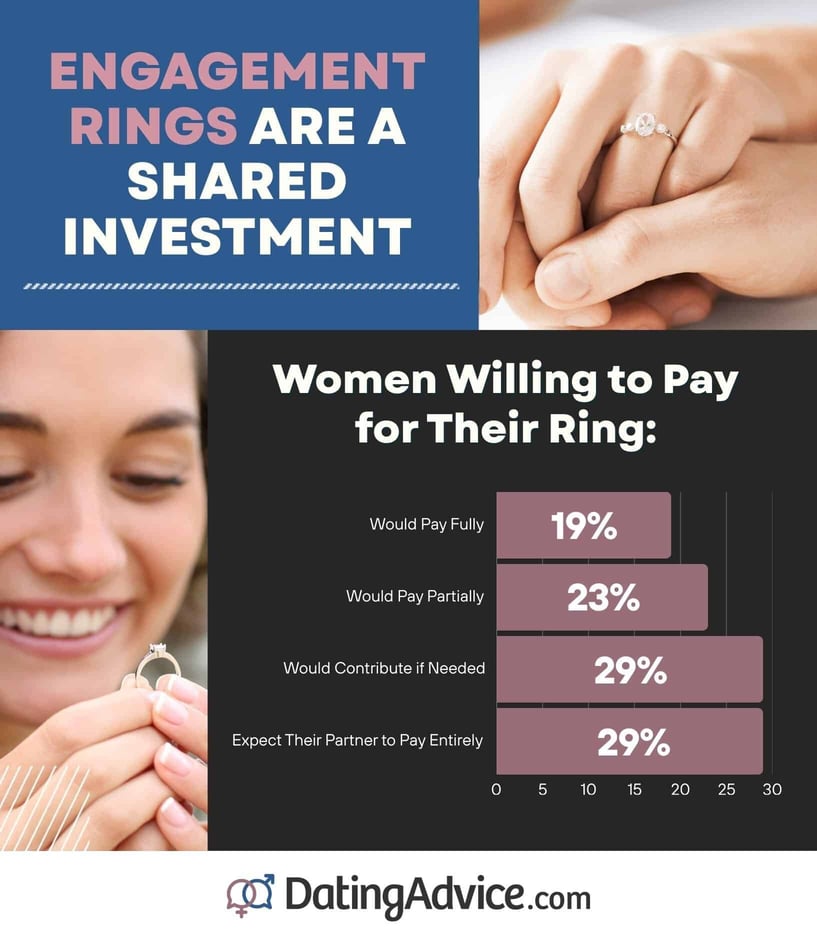
According to DatingAdvice’s Holiday Engagement Survey, more than 70% of women surveyed said they’re willing to help pay for their engagement ring, marking a major shift in long-standing financial and gender expectations around proposals.
But shifting financial expectations are just one part of the story. Our survey findings point to a new engagement reality where shared finances, cultural pressures, and privacy collide, leaving couples to do engagements their way.
Nearly 1 in 3 Millennials Feel Some Level of Engagement Season Pressure
Engagement marks the next big step in a relationship, so it’s no surprise if there are nerves when it comes time to pop the question. However, our study reveals that not everyone views getting engaged with the same amount of pressure.
While the majority of surveyed couples don’t feel a lot of engagement stress, the intensity of that pressure varies dramatically by generation. Younger generations felt a lot more proposal stress compared to older generations, with millennials and Gen Z expressing more than triple the amount of stress as boomer respondents.
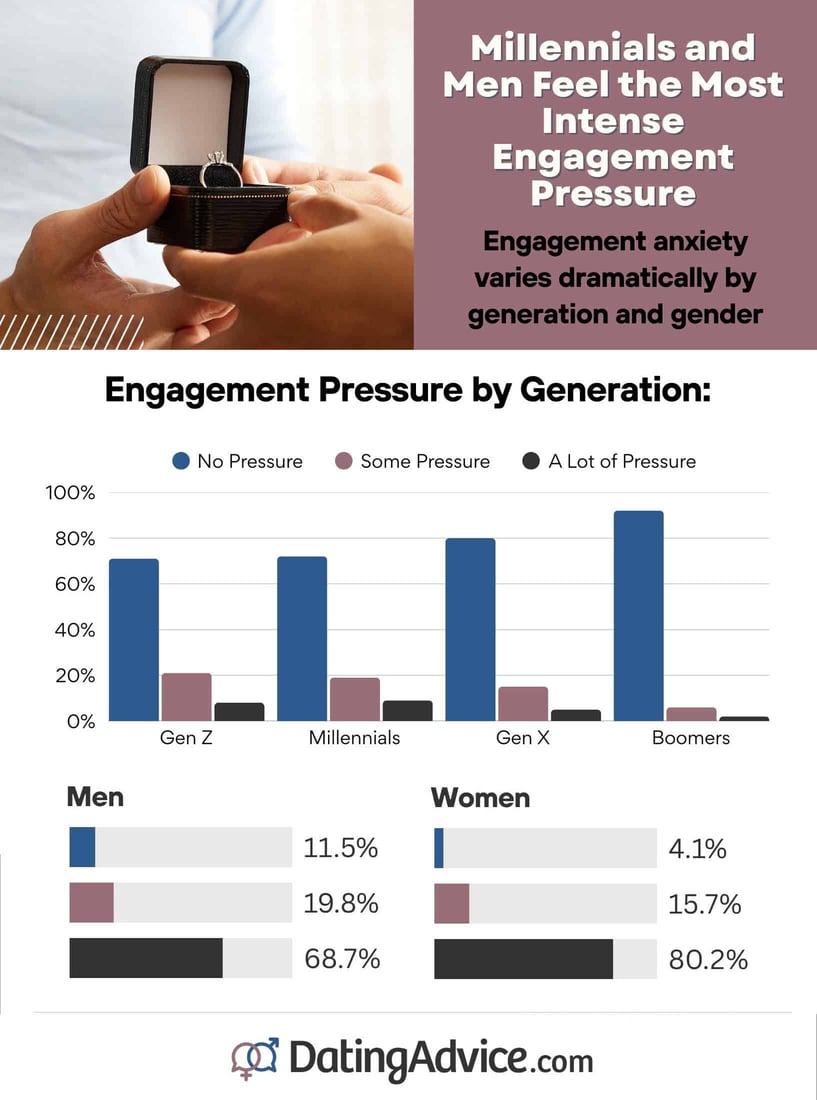
Nearly 1 in 3 Gen Z and millennial respondents said they felt some level of pressure to get engaged, while older generations reported feeling stress at a far lower rate. Here is how engagement pressure broke down by generation:
- Gen Z: 29% (8% feel a lot of pressure)
- Millennials: 27.6% (8.7% feel a lot of pressure)
- Gen X: 20% (5% feel a lot of pressure)
- Boomers: 8.3% (2% feel a lot of pressure)
Our results reveal a trend: The older the respondent is, the less likely they are to be stressed about proposal planning. This steep drop-off in engagement anxiety among generations could be due to a variety of factors, including life stage.
At their current life stage, younger couples are likely to be navigating increased financial strain and partnership expectations, while older couples most likely face far fewer emotional, financial, and societal pressures than their younger counterparts.
Men Are Nearly 3X More Likely to Feel Intense Proposal Pressure
Despite cultural assumptions that suggest women feel the most engagement urgency, our study shows that men feel the most intense pressure.
About 11.5% of men say they felt “a lot” of engagement pressure, compared to just 4.1% of women. Men also reported higher levels of stress across the board, with nearly a third (31.3%) of men expressing some level of pressure versus only 20% of women reporting the same.
It is evident that men are feeling the emotional weight of engagement at a higher rate. And some men carrying the burden to perform may explain why. Many men have to consider the timing, preparations, and expectations of these moments, not to mention their personal readiness.
We also can’t ignore the pressure men may feel to get the proposal right, especially in a time when social media culture heavily influences the engagement process. The blend of these factors shows that the anxiety men are feeling may have less to do with hesitation and more to do with financial stress, self-expectation, or fear of getting it “wrong.”
Public or Performative Proposals Are on the Decline — Most Prefer a Private Moment
Modern proposals take a lot of planning and prep, especially if social media is involved. But it seems more couples are swapping the spectacle and performance of these moments for more privacy and intentionality.
Our study found that a third (32.8%) of respondents say they would rather experience a private proposal than a public one, with women (35.7%) leading in this sentiment, compared to men (26.6%).
Stark differences in opinion among generational groups also stood out. The preference for privacy over public proposals increased sharply with age. While Gen Z and millennials are still largely open to public proposals, boomers and Gen X take a much different stance.
Here is how preference for no public proposal shook up between age groups:
- Gen Z: 20.7%
- Millennials: 21%
- Gen X: 40.7%
- Boomers: 53.1%
These results mirror our previous pressure data. Older generations not only feel less pressure to get engaged but also prefer proposals free from outside expectations. In contrast, Gen Z and millennials may favor public proposals due to social media culture, societal expectations, and comfort with visibility.
Despite social media’s fascination with viral engagement moments, many couples now view proposals as deeply personal. This shift toward privacy and intentionality may mark the turning point in what it looks like to have the “perfect proposal” in today’s relationship landscape.
Engagements no longer have to align with societal expectations or norms to be perfect, but can align with the couple’s comfort level and unique desires, so it’s just right for them.
Methodology
This survey was conducted by DatingAdvice and Prodege and includes responses from 1,000 U.S. adults ages 18 to 79 who reported being in a committed relationship. The sample includes a broad distribution across gender, age, and U.S. regions. Fieldwork was completed in December 2025. The theoretical margin of error for a probability sample of this size is ±3.1% at the 95% confidence level.