



More than 1 in 3 Gen Z adults identify themselves as celibate, according to The State of Us: National Study on Modern Love & Dating in 2025, a survey conducted by DatingAdvice.com in partnership with the Kinsey Institute.
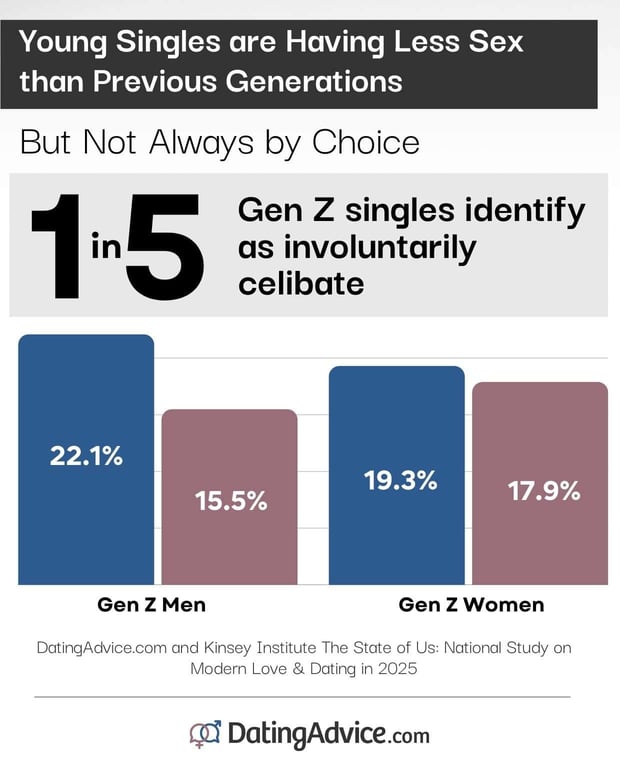
This finding reflects not only a growing cultural trend but also a burgeoning paradigm shift in the dating landscape among young people. Gen Z adults, currently between the ages of 18 and 25, are not engaging in sex as much as previous generations. And their choice to abstain from sex isn’t always entirely theirs.
While 22.1% of Gen Z men and 19.3% of Gen Z women view themselves as involuntarily celibate, other Gen Z singles have made the choice to remain abstinent from sex out of their own volition.
For many young adults, the decision to opt out of sex is deeply intertwined with socioeconomic issues like inflation, political instability, and threats to reproductive rights. Gen Z isn’t necessarily avoiding sex due to a lack of desire, but more so because they feel like they have to protect themselves.
DatingAdvice partnered with the Kinsey Institute to uncover what’s prompting the rise in celibacy among Gen Z adults and how it’s impacting the world of dating.
Nearly Half of Celibate Gen Z Women Blame Politics for Abstaining from Sex
Celibacy is on the rise among younger generations, and the reasons why are less based on traditional values, such as religious beliefs, and more so on their surrounding environment.
Our study reveals a compelling trend: Young Americans are choosing to abstain from sex as a response to socioeconomic pressures. In fact, among the 33% of surveyed Gen Z singles who identify as voluntarily celibate, most have cited issues such as inflation and political insecurity as the primary drivers behind their choice.
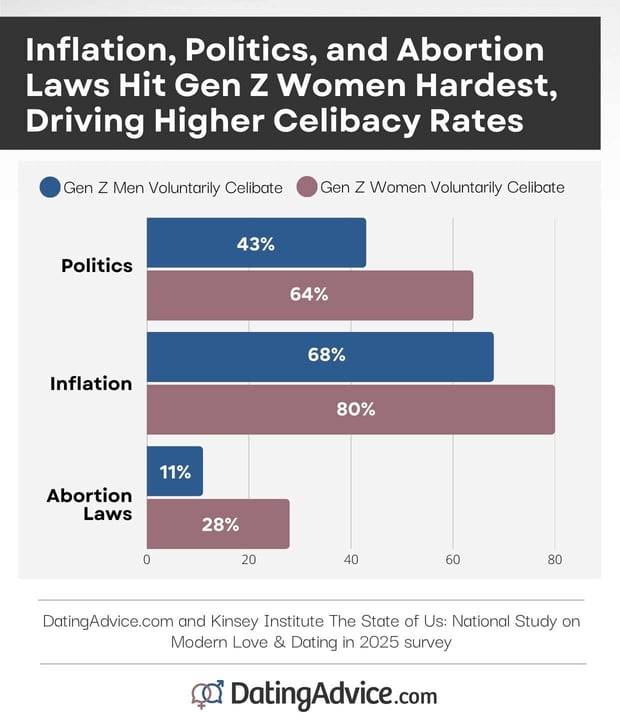
Let’s break down these results by gender demographics. While both men and women are impacted by the same factors, there are considerable differences in the rates at which they are affected.
Among the 15% of Gen Z men who are voluntarily celibate, 68% report that inflation has negatively affected their dating lives. Meanwhile, another 43% say the current political climate has negatively affected their love life in the past year.
Celibate Gen Z women reported higher levels of concern across the board. Inflation, politics, and laws against abortion were all commonly cited factors for this group:
- Inflation: 80%
- Politics: 64%
- Laws against abortion: 28%
These results indicate that these socioeconomic factors are particularly pressing for women, which, in turn, can explain why women are choosing celibacy at higher rates than men.
Gen Z Twice as Likely as Boomers to Say Politics Hurts Their Dating Lives
It’s no secret that politics are shaping dating decisions, especially among younger Americans. Compared to older generations, Gen Z is more likely to link macro social and political concerns with personal relationship choices, helping to explain the rise in celibacy among the generation.
When asked to describe their current sex life, 16.5% of Gen Z respondents said they were taking a break from sex for a while and identified themselves as voluntarily celibate.
And Gen Z singles are far more likely to cite politics as the reason for their celibacy than their older counterparts. While 43% of Gen Z men say politics have hurt their dating lives, only 17% of boomer men report the same.
The gap is even wider for women. About 64% of Gen Z women say politics have negatively affected their dating lives, while only 24% of boomer women express the same — a 40% difference!
Gen Z is facing a sexual recession. And the rise in celibacy is just a reflection of a generation under immense pressure.
Divisive politics and soaring inflation have given many young Americans no choice but to push back on romance and sex to curtail their effects on their lives. Voluntary celibacy isn’t just about a lack of desire to have sex; it’s a defensive stance against a world that feels increasingly hostile toward connection.
Unless the political and economic environment improves, many Gen Z singles will continue to sacrifice their love lives to keep afloat in this country.
Methodology
The State of Us: National Study on Modern Love & Dating in 2025 was conducted by DatingAdvice.com and the Kinsey Institute, led by Dr. Justin Lehmiller and Dr. Amanda Gesselman.
Data was collected by Prodege.com among a nationally representative sample of 2,000 single U.S. adults ages 18 to 91 via an online survey from April 29 to May 8, 2025. The sample was balanced for age, gender, household income, geographic region, and race/ethnicity. Margin of error: ±3 percentage points at the 95% confidence level.
Press inquiries: Colleen@datingadvice.com