



The holiday season is full of joy, love, laughter, and the occasional awkward tension between extended family members.
Sometimes emotions run high (especially if the booze is running freely at a holiday gathering), and you might feel the need to do damage control between your family and your significant other. Or maybe you’re more like me and try to stay far far away from the drama.
I’ve seen spouses get flack for interfering in a family conflict and for staying out of it. So what’s the right move when things get…uncomfortable…at the dinner table?
I went to an expert Dr. Tracy D. to get her insight. She literally wrote the book on this. “Your Husband, You, and Your Mother-in-Law” has been an eye-opening read for me, and I knew her takeaways as a psychologist and wife would be on point.
Here’s how our Q&A went:
What common mistakes do couples make when at family gatherings and interacting with in-laws?
With my near 20 years of experience working with couples, I can tell you this:
Every couple comes to me wanting to be on the same page.
One of the biggest struggles I see, however, is they stop prioritizing and focusing on the “we.” Instead of asking, “what do we want to do?” It becomes, “she doesn’t want to or she’s making this decision, or he wants to spend time with his family.”
And when that happens, it creates distance instead of teamwork. This is also a form of splitting and inevitably when you split you from your partner, it gives the message to your parents that you are not a team.
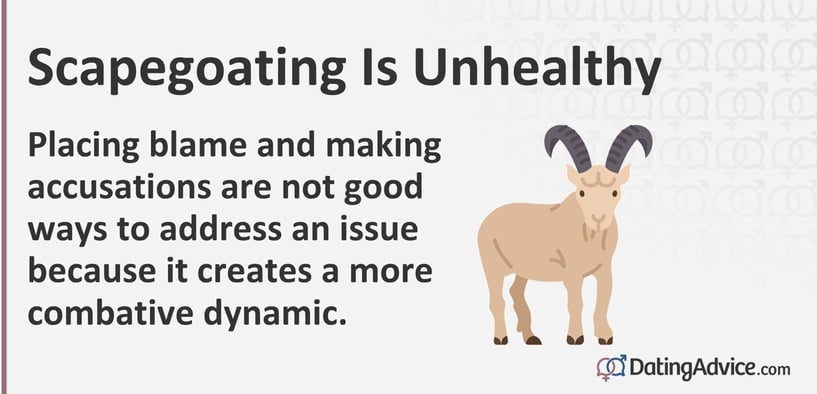
This can lead later on to scapegoating and making the child-in-law the bad one.
Another mistake I commonly see is denying your partner’s experience, which sounds like:
- “It’s not a big deal.”
- “That’s just who mom is.”
- “You’re being too sensitive.”
You might have a different experience of what happened, but you can still validate their experience.
Validation doesn’t mean that you have to agree with it. It just simply says, I imagine that really hurt for you, or I can understand how that would be hard.
And finally, not speaking up for your partner to your parents when critical comments are made.
Oftentimes these small micro moments start to feel like papercuts, but as one client described it to me, she said it felt like death by a thousand papercuts.
Building a connected relationship is about setting firm and loving boundaries. And this is one of the most powerful ways that you can show your partner that you are a team,d and you’ve got their back.
What are some red flags of toxic dynamics between mothers and sons?
I always like to start this one with a caveat. Sometimes we see [them] as red flags, but other times they’re simply knowledge gaps. So if you bring something up to your partner and they’re open to learning and growing with you, that’s a really good sign.
That openness signals that they’re willing to break out of old patterns and to begin to differentiate from the family system they came from.
So maybe these are beige flags and not necessarily red flags.

Here are some things I’d look out for. When a son has to check with his mother for everything, this might signal enmeshment. And this is where emotional boundaries are blurred and independence and autonomy haven’t fully developed.
This means his sense of self may still be deeply tied to his mother’s approval or her emotional state. He fears upsetting her more than focusing on his partner’s needs,
This can point to codependency. This is a pattern where one person’s feelings or stability depend on keeping another person comfortable. It’s not about love. It’s about emotional survival.
Another one is if he denies your experience and consistently prioritizes his mother’s feelings over yours. This is going to signal this rigid repeating family cycle where the loyalty to his family system takes a priority over the couple bond.
All of these are indicators that boundaries are blurry and healthy couples need healthy boundaries. Breaking these patterns does require people to bring awareness and compassion and a willingness to try something different because essentially we want to be a strong, solid team.
Is it okay for a partner to remain neutral in a disagreement between you and their family?
This is such a common and important question. So I’m so glad we’re answering this one here. When conflict arises between a partner and their family, many people believe that the best approach is to just stay neutral.
But here’s the thing. When you go neutral, it can also lead your partner to feel abandoned. And when one partner stays quiet or they step back or they shut down, it leaves the other person feeling unseen, unsupported, or maybe even gaslit by omission.
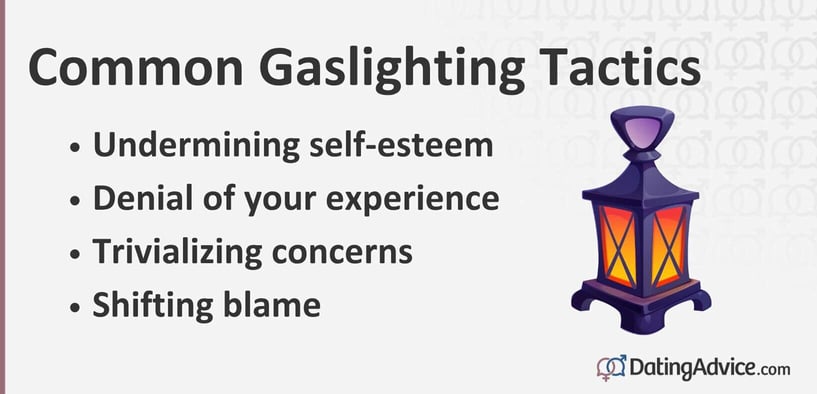
It’s not about taking sides here. This is the key piece. You’re not trying to figure out who is right or wrong, but instead you need to validate your partner’s experience.
That validation, that standing up for them, is also what it means to build respect and security together. You might encourage a dialogue between your parent and your partner, only if this can be a respectful conversation with clarity, moving forward and true repair.
But for many other people, that kind of communication is impossible, which means you, as the adult child, step in with your family.
That emotional responsibility lies with you. And the key is this: neutrality should never look like silence because silence perpetuates those unhealthy family patterns, especially when we look at families where avoidance, minimization, or parentification are our main coping strategies.
Here’s what I want you to know: When you stand up for your partner, when you go and speak to your parent as their adult child, it says to your partner, we are breaking out of these unhealthy family patterns. (I outlined 10 of them inside my new book.)
And it says to your partner, I’m prioritizing us, and we are going to create new, healthier cycles of connection.
Could you provide an example of a MIL crossing a boundary and how it should be addressed?
Let’s take a common example. A mother-in-law shows up unannounced. Maybe she stocks your fridge or even uses her key, the one for emergencies, to come in without notice.
Now, from her perspective, she might truly have good intentions. She believes she’s being helpful, she’s being generous, and maybe this is just what they did in her generation. But good intentions don’t erase impact.
What we want to pay attention to is how behavior lands because it can feel intrusive, disrespectful, and this can slowly erode the couple’s sense of security and privacy in their own home.
Now, this is often where boundaries and enmeshments start to intersect. When parents have long been involved in every aspect of their adult child’s life, it can be difficult for them to recognize where the family system ends and the couple begins.
Here’s how you can address it. Start first, always, by reassuring the relationship. This looks like:
“Hey, we love spending time with you. We love when you come over.”
This prioritizes connection. Then set clear and concise boundaries. It might sound like this:
“We need to coordinate visits first, or we’re not going to be able to spend time together.”
But here’s the catch that I want you to remember: Boundaries only work when they are paired with action.
She’s going to show up unannounced. And so when she does, you need to kindly let her know that you can’t visit with her at this time.
Or if she keeps using the key, you take the key back. It’s important to know this is not punishment. It’s about aligning with what really matters to you and protecting your relationship as a couple.
And this is how families begin to shift out of those old patterns of over-involvement and build into those new patterns of respect and differentiation.
And remember this: Your boundaries are about what you are or are not willing to do, but you need to have a follow-up action because that’s how you protect your peace.
What do you wish more people knew about in-law relationships?
I wish more people understood that your job isn’t to abandon your family. It’s to choose your partner’s emotions and needs first. It’s to prioritize your chosen family. And this is how you build a strong, secure foundation as a couple.
When you practice my VAULT method, when you become this united team, you then are able to set boundaries and bring your family in with clarity and compassion.
Here’s the other piece I wish people knew: When you do nothing, you are actually part of the problem.
Silence ends up leaving people confused. It also leads them to fill in stories and who is going to be the bad one. Typically, the in-law child gets blamed.
So what you want to do is to change those cycles by communicating clearly.

I also wish people understood that this is actually a triangle that you’re stuck in, and you’re not being put in the middle or stuck in the middle. That triangle is going to impact all of your relationships. It’s between you, your partner, and their mother.
And one of the most important things you can do is to strengthen your partnership so that no one is put in the middle.
Here’s the last thing I want to emphasize. Your boundaries are yours to own. It’s not about asking other people to do things. Those are requests. But instead, it’s about sharing with others what you are or are not willing to do. That’s the definition of a boundary.
But I want people to know this: When you set a boundary, you can be sure that others might be upset about that boundary. If you’ve never done it before, it’s going to feel unfamiliar, and it is kind of upsetting that you’re no longer attending the holiday dinner on the day that you always used to do it.
This doesn’t make your boundary bad, and it doesn’t make you wrong for setting this, but instead recognizing that the first few times you set those boundaries, everybody is having to enter into these tension-filled conversations.
Discomfort is not bad. It’s just not familiar. And so you need more time to get comfortable with it and keep practicing it by also holding up the action piece of what the boundary is.
And all of this is exactly what I teach you inside my new book, “You, Your Husband and His Mother.” I teach you how to get aligned, how to get on the same team, and also how to set boundaries with compassion and clarity, especially when we think about the different types of mother-in-law you might have and the family dynamics that exist between you, your husband, and his mother.
Final Thoughts: Lead With Love & Give a Little Grace
Look, all families have their moments, but at the end of the day, these are the people who show up for you. The ones who gather every year to (hopefully) enjoy each other’s company and bask in those lovey-dovey feel-good moments.
Whatever holiday you’re celebrating, remember that it’s not going to be perfect. And that’s part of the beauty. It’s how you recover and reknit those bonds that matter most.
I’ll leave you with a quote from Dr. Tracy’s book that stuck with me:
“Bringing together adults of different generations can be challenging as you try to navigate freedom, control over space, and autonomy. It can be a recipe for disaster if implicit expectations and desires are not openly discussed in order to reach agreement as a cohesive unit.”