



Conversations about safe sex can be tricky for anyone — when you’re poly and sexually active, there can be added layers to think through. My clients can sometimes get bogged down in the logistics of ethical non-monogamy, but doing it safely is as simple as asking the right questions.
Do you want to always use a condom or barrier? Do you want to see STI test results from all your date’s other partners? Can you share the same sex toys, or does each relationship need its own?
The answers will vary from person to person and relationship to relationship, but the key is being able to have the conversation and figure out the path forward together.
It doesn’t have to be scary or intimidating. Here’s what I recommend for having the safer sex conversation when you’re poly and dating multiple people.
Think About Your Boundaries First
Conversations about safer sex can feel vulnerable and charged. If you’re requesting safer sex accommodations from someone new, you may feel worried about coming off as demanding, pushy, paranoid, or judgmental.
No one wants to feel like their health choices (or sex choices) are on trial, so you’ve got to approach this talk with sensitivity, maturity, and curiosity. And you have to know yourself.
Of course, we know that safe sex conversations must happen — but the discussion can push buttons if handled the wrong way. It can be difficult to advocate for what you want in the moment. Sometimes you might not even know what you want.
Especially if you’re really into someone, it can feel difficult to parse out what you really think and what you think they want to hear.
Make this easier on yourself (and your partners) by taking some time to think through your priorities around safer sex on your own.
Consider your sexual limits and boundaries by asking yourself these questions:
- Are there activities you don’t want to do without barrier methods?
- What are the things you don’t want to do at all?
- What are you okay with doing if you know the other person has been tested recently?
- How recently?
Decide the answers to these questions ahead of time, so you don’t have to figure them out in the heat of the moment. That will make your life (and your relationships) flow more smoothly.
Good Questions to Ask Yourself & Your Partners
When you’re getting to know a new person, and things seem to be picking up momentum, it’s natural to talk about sexual compatibility.
Ask questions about sexual preferences, and let that lead into safe sex practices as well.
- What are you into?
- Are you vanilla or kinky?
- A top or bottom?
- Can you host, or do you live with other partners or family members?
- What kind of dynamic do you like? What are you looking to add to your sex life?
- What are your fantasies?
- What’s your safe word?
This can be a great way to initiate a conversation about safer sex, even if you’re nowhere near the bedroom yet.
We often silo the safer sex conversation into its own obligatory chore, something you have to get out of the way before the more “fun stuff.” But I’m here to tell you it doesn’t have to be that way.
As you’re talking about desire and brainstorming your potential sexual overlaps, feel free to incorporate your preferred safer sex practices. “I love wearing a strap and topping with condoms,” or “I’m super into being eaten out by partners I’m fluid-bonded with.”
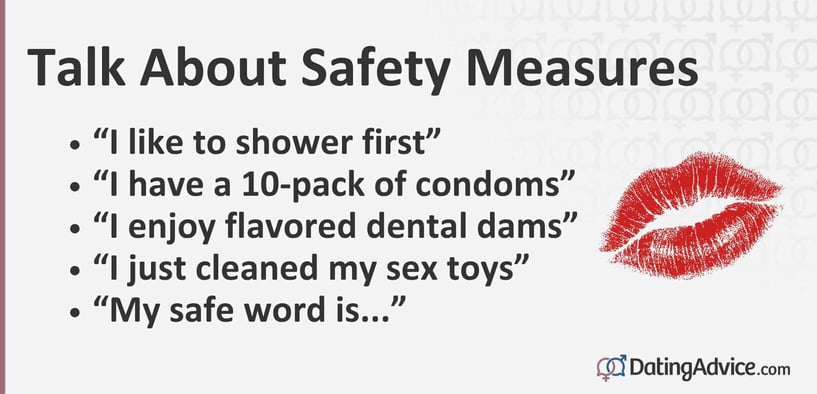
You don’t need to figure out absolutely everything about your safer sex plans in the very first moment the topic is raised over coffee, but incorporating safer sex practices into your discussions about sex from the beginning is a good idea. It sets an adult tone in a way that feels more natural and organic than blurting out “Did you bring condoms?”
Talk about the logistics along with the fantasies, and you’ll create more intimacy and excitement because you’ll both know what to expect.
How to Talk About STI Testing
They say the best defense is a good offense, and that’s also true when it comes to discussing safer sex. Being proactive can help to lead the conversation.
Bringing up safer sex practices can feel challenging in part because it’s a lot to ask — to use barrier methods, to disclose their STI status or get tested, to disclose their safer sex practices with other partners of someone you don’t know well yet.
One way to make that easier is to lead with your own information. Make it clear that you’re willing to do (or have already done) everything you’re asking of your new date.
If you're poly, the responsible thing to do is to get tested regularly on your own. Then you can offer up your STI status and latest test as a way to initiate this conversation.
"I have HSV-2, though I'm not having an outbreak right now. I feel most comfortable with regular testing — I last got tested in October, and didn't have any new results, though I'm happy to get tested again. What about you?"
Lead With Your Preferred Safer Sex Practices
I know it can feel intimidating to have a conversation about safer sex practices if you're starting completely from scratch. Opening up with "How do you feel about safer sex?" to a new person can be scary. But it can also build intimacy and trust.
In a poly relationship, you need to be extra conscientious in keeping an ongoing dialogue around safer sex.
Again, it can be good to offer up your own experiences first: "I usually use barrier methods with people I'm sexually active with, unless we've agreed to be fluid-bonded. My nesting partner and I are fluid-bonded, but I use barrier methods with everyone else. I also get tested every three months. What do you and your partners prefer to do?"
One thing that can be uniquely challenging about safer sex conversations in poly dating is balancing discretion and transparency. On one hand, you’re protecting the privacy of your partners, but on the other, you need to disclose enough information that makes other partners feel safe making informed choices about sexual practices.
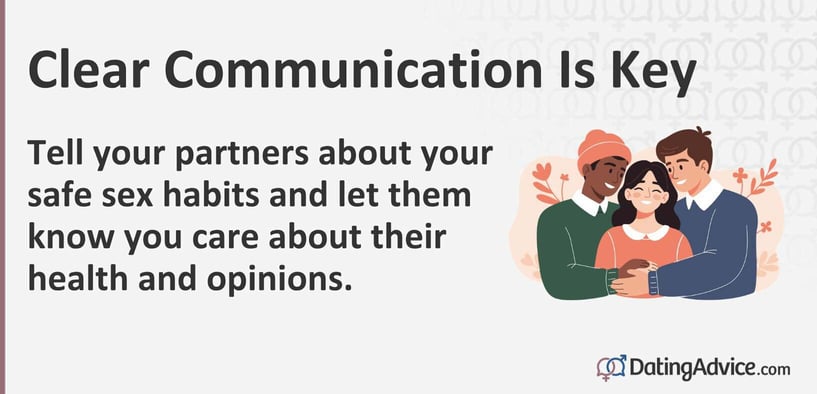
You can make this a little easier by modeling the level of disclosure you're comfortable with. Talk about your baseline safer sex practices and any information you feel a new partner needs to know, like the STI status of yourself and your sexual partners.
In general, it's often best to assume that anyone you're having sex with is having unprotected sex with others and act accordingly. Use protection during every encounter (especially if you're seeing people more casually).
But it's also important for trust-building and communication to discuss what level of safer sex practices you want to have in your relationships, especially with people you're seeing more seriously.
Keep the Conversation Going
Unless you're having a one-night stand (which you could be!), it's crucial to remember that safer sex isn't a one-time conversation.
In any relationship, it's important to keep the door open to talking about what your needs and desires are around safer sex, especially as your intimacy and sex practices might change.
In a poly relationship, you need to be extra conscientious in keeping an ongoing dialogue around safer sex, as you and your partners may be having different types of sex with different partners as time goes on. Checking in about what that means for your other relationships is key.
Maybe you and a partner have recently decided to fluid bond; it's helpful for your other partners to know this information, or at least its broader implications, so they can make informed choices about their own sexual health.
If one person in the broader landscape of your relationships has been diagnosed with an STI, or if you're talking about trying for a baby with your primary partner, these developments impact others. Keep talking, keep playing, and keep it 100!