



No one wants to go through the loss of a breakup. Breakups hurt. Unfortunately, they’re a nearly unavoidable part of dating life.
Just how common are breakups? How long can people expect their relationships to last? Let’s look at the numbers and identify relationship trends that could impact significant others of today and tomorrow.
1. Only 1 in 3 Men See Their Breakups as “Civil”
Not everyone sees their breakups the same way, it turns out. A YouGov poll found that 31% of men saw their breakups as civil, compared to just 20% of women1.
It’s possible that a smaller percentage of men take part in toxic breakups, but it’s also possible that men and women see their breakups in different lights. Civility is in the eye of the beholder.
2. Over Half (58%) of Americans Call Their Breakups “Dramatic”
Seldom are breakups pleasant. Emotions can run high, and sometimes the conversations can veer into arguments and accusations. For 58% of Americans, breakups are downright messy, according to the same YouGov poll2.
If you’ve gone through a breakup that wasn’t exactly amicable, don’t beat yourself up too much. Losing a relationship understandably creates big emotions (maybe even some unresolved trauma). It happens to over half of us.
The most productive thing you can do to move forward is to cut contact with the person and work on yourself so you’re ready for the next relationship.
3. Most Teens (78%) Say They’d Rather Break Up in Person
Despite the number of young people who admitted to breaking up over text, the majority of them agree it’s not the right way to end a relationship. Pew Research Center found that 78% of teens believe the correct way to break up with someone is in person, not online3.
Is breaking up in person better?
Survey says YES!
It isn’t always easy to put your values into practice, so it makes sense that many teens could think it best to break up in person, yet still break up over text. As a teenager, I broke up with a few boyfriends on the phone, though I didn’t think that was the kindest thing to do even at the time.
4. But 34% of Young Adults Have Ended a Relationship by Text
While tones around breakups can range, so can the actual methods of going about a breakup. YouGov found that about 34% of young adults had ended a relationship over text4.
It might not be the kindest way to call it quits, but ending a relationship over text is certainly easier than ending it in person. Not only do these young adults get to avoid seeing their partner’s reaction, but they also get to fully tailor what they say before hitting send.
5. After a Relationship Ends, 30% of Teens Block Their Ex
Teenagers have their own values and protocols around relationships, and it’s not uncommon for exes to block each other. Pew Research Center found that 30% of teenagers blocked their exes after breakups5.
It’s hard to make up a blanket rule about whether or not to block your ex after a breakup. For those who might be tempted to keep a fuzzy relationship boundary, it can be useful to have that hard of a line. But for more amicable breakups or those that genuinely move toward friendship, blocking can be unnecessary.
6. Most Young Teens Break Up After Just 5 Months
It’s no secret that young relationships are a bit more turbulent. One University of Florida study found that the average 14-to-15-year-old relationship ended after just five months6.
Your personality and interests can change a lot at this time, so it makes sense that the relationships might not stick around for the long haul.
7. About 1 in 5 Have Been Ghosted at the End of Their Relationship
We usually associate ghosting with something that happens in the early stages of dating. When you’ve been on two dates, being ghosted is hurtful, but nowhere near as traumatic as getting ghosted at the end of a committed relationship.
Yet one study found that 19% of people reported getting ghosted at the end of a long-term relationship7.
This is obviously not ideal. Without the closure of a breakup conversation, the experience can leave you “haunted” by the relationship and wondering what went wrong.
8. For Men, the Median Divorce Age Is 43.3
Divorce can come at any age, but the early forties are a popular time for it. According to Bowling Green State University, the median age to divorce for men is 43.38.
For most couples, the early forties come after around a decade of marriage and bring about a good deal of relationship stress. With a potential mortgage and children, your expenses might be higher. And parenting itself can add a great deal of strain.
But there’s a silver lining – if you get through this rough period, the chance of breaking up goes down considerably.
9. Age Gaps Increase the Chance of Divorce by 18%
Age is just a number…except when it’s not. One study found that age gaps of greater than five years increase a couple’s chance of divorce by 18%9.
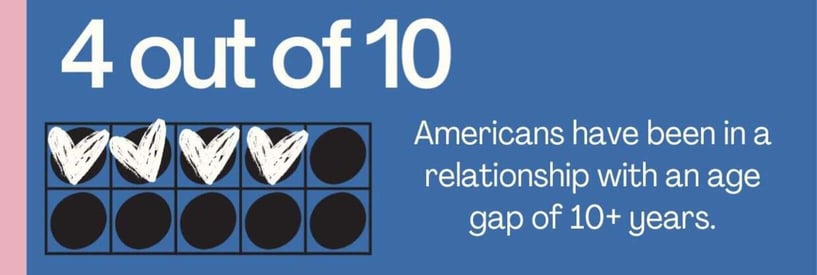
While age itself may seem like a shallow factor, it’s connected to a lot of facets of compatibility – like finances, career trajectory, and family planning – that can strain a relationship when they’re misaligned. Just make sure you and your partner are on the same page about the phase of life before jumping into marriage.
10. Adults Over 50 Make Up 36% of All Divorces
Divorce may be more common in your early forties, but it certainly happens at other ages. In recent years, divorce among seniors has become more common, with adults over 50 now making up 36% of all divorces10.
This spike in divorce may be more generational than anything else. Divorce overall reached its peak in 1980, and the generation that was young adults during that time period is now the elderly.
11. At 14.5%, Gay Men’s Relationships Are Least Likely to End
Dating certainly isn’t easy for gay men, but their relationships do last. One study found that just 14.5% of committed gay male couples broke up, less than any other demographic11.
This low number suggests that when gay men get into a relationship, they know what they want, and they’re in it for the long haul.
12. While 29.3% of Lesbian Relationships Dissolve
Interestingly, lesbian relationships experience the opposite phenomenon of gay male couples, with 29.3% of lesbian couples breaking up, higher than any other relationship orientation12.
13. Odds of Lesbian Breakup Decrease by 13% for Every Year They’ve Been Together
Lesbian couples might break up more often, but when they do stay together, they stay together for a long time. The same study found that for each year a lesbian couple stays together, their odds of breaking up go down by 13%13.
14. The Average Relationship Lasts 3.54 Years
Relationships vary dramatically in length, but on average, they last about 3.54 years, according to one study14.
In three and a half years, couples can solidly get to know each other and build a life together. It’s a reasonable amount of time for marriage to come up and for couples to decide whether they want to stay together forever or quit while they’re ahead.
15. After 3 Months in the Same Area, 37% of Formerly Long-Distance Couples Call it Quits
If you’ve ever been in a long-distance relationship, you might think that living in the same area is what your relationship needs to be at its best. But some couples discover that absence makes the heart grow fonder...and close proximity makes it break.
One study found that after three months of living close to each other, 37% of formerly long-distance couples split up15.
Some couples get used to being in a long-distance relationship, so living close to each other can feel suffocating. For others, being long-distance covers fundamental incompatibilities. Being in a long-distance relationship isn’t inherently harder, and living close to your partner isn’t always better.
16. About 1 in 3 Unmarried Young Adults Break Up Within 20 Months
For unmarried young adults, breakups are often just around the corner. One study found that in a given 20-month period, 36.5% of 18-to-36-year-olds go through a breakup16.
At this age, many young people stay in committed relationships that will last several years or lead to marriage. But others still experience several short-term relationships before finding ones that last.
17. Nearly 15% of Exes Got Back Together & Stayed Together
It can be done! Not all breakups are final. One study found that of couples who broke up, 14.94% got back together and stayed together permanently, while another almost 15% got back together and broke up again17.
“Un-break my heart, say you’ll love me again." —Toni Braxton
It’s not inherently wrong to get back with your ex. But if there was a fundamental issue that drove you apart, make sure to resolve it first.
18. Around 1 in 4 Young Adult Relationships End Within 2 Years
The second year of dating can be taxing for many young lovers. One study found that 24% of couples broke up between years one and two of dating18.
During this period, you’re out of the initial cupcake phase. The excitement has worn off, and you’re left with the work of building a sustainable relationship.
19. After a Breakup Due to Infidelity, 58% Got Back Together
Surprisingly, infidelity isn’t always a permanent relationship-ender. One study from YouGov found that 58% of couples got back together after the relationship ended due to infidelity19.
Cheating is one offense that ends many relationships, and many people believe it would be a hard line for them. But the reality of dealing with the fallout of infidelity is not so simple, and many couples find their way to reconciliation.
20. Sadly, 92% Break Up After Opening Their Marriage
For some people, non-monogamy can help them find a relationship structure that gives them the amount of flexibility they need for fulfillment. But for most people – especially those already in monogamous relationships – trying it out can be disastrous.
One study found that 92% of marriages fail after trying non-monogamy20. When couples open their relationships without knowing what they’re doing or with one person unhappy with the arrangement, it can have dire consequences.
21. Divorce Peaked in 1980 & Has Steadily Declined Since
The peak of divorces happened in 1980. Couples who married young in another era found their relationships rocked by growing misalignment over the division of labor and relationship structure.
Divorce Rates 1980-2023
| Year | Divorce Rate Per 1,000 |
|---|---|
| 1960 | 9.2 |
| 1980 | 22.6 |
| 2008 | 20.5 |
| 2023 | 14.4 |
Since then, divorce has been on a steady decline, hitting just 14.4 divorces per 1,000 couples in 202321.
For couples looking to marry now, this is a good sign. When partners come together with similar values and after knowing what they want, their relationships have far better outcomes than their grandparents’ generation.
22. The Plurality of Divorces (24%) Occurs in 5 to 9 Years of Marriage
Most couples make it past the first five years of marriage. But it’s around here that fundamental differences come to a head. Pew Research Center found that 24% of divorces occur between years five and nine of marriage22.
Once couples first get out of the newlywed period, tensions in the marriage can be the hardest to navigate. New parenthood, fertility issues, or career changes can also add to the stress of this period.
23. Just 22% of Married Americans Born Outside the U.S. Ever Divorce
Immigrants are much less likely to divorce than native-born Americans. Pew Research Center found that just 22% of Americans born outside the U.S. are divorced, compared to 36% of native-born Americans23.
Immigration is extremely difficult, which could mean that immigrant couples work better as a team to make a life in America. There may also be value differences between native-born Americans and immigrants that make immigrants more likely to work through problems than those born in the US.
24. Two-Thirds of Divorced People Remarry
If you’re divorced and worried about finding love again, rest assured, things will likely work out for you. According to the Pew Research Center, 66% of divorced people marry again24.
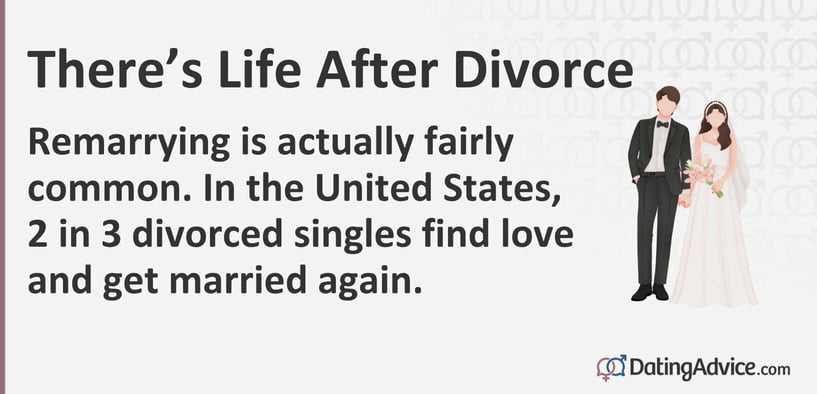
Just keep in mind that the likelihood of divorce in a second marriage is slightly higher than in a first. Don’t jump into a new marriage — make sure you’re genuinely ready.
25. Only 60% of Married Couples Who Experience Unplanned Births Will Stay Together After 10 Years
An unplanned pregnancy is stressful at the moment, and it can have serious negative effects on a relationship. One study found that of married couples who experienced an unplanned birth, only 60% were still together a decade later25.
Interestingly, the effects were particularly bad when one partner — especially the man — had planned the pregnancy and the other hadn’t. This dynamic could suggest deception or coercion in the relationship, which can create hurt and betrayal outside of the birth itself.
26. Women Initiate 69% of Divorces
This isn’t just a manosphere recruitment line. It’s actually true that women are more likely to initiate a divorce.
Over two-thirds of divorces (69%) are initiated by women26. Because more domestic labor tends to fall on women, the effects of a bad marriage may be felt more strongly by women in a relationship.
Additionally, women may be more interested in seeking therapy or other forms of intervention when the cracks start to appear, so if they go unresolved, it often falls on women to decide whether to stay in a marriage or leave.
Initiating divorce more often does not mean women take marriage less seriously; it just means it often falls to them to take action. Much like the dishes in the sink.
27. Over Three Quarters (77%) of Americans Have Dumped Someone
When it comes to dating, you’re usually the villain in someone’s story, no matter who you are. Most of us aren’t exclusively the dumper or the dumpee. YouGov found that 77% of Americans have broken up with someone at some point27.
Still, breakups hurt, whether you’re breaking up with someone or they’re breaking up with you. The loss of a relationship is painful, however it comes about.
28. A Shocking 34% of Americans Admit to Cheating on a Partner
The vast majority of Americans break up with someone at some point, but a surprisingly high number have cheated, too. YouGov found that about 1 in 3 Americans — 34% — admitted to cheating on a partner over the course of their lives28.
We’re all human, and cheating can come about in a wide variety of ways and for many different reasons. If you do cheat on your partner, the best policy is to fess up as soon as you can.
29. Just 10% of 18-to-44-Year-Olds Have Been Divorced
Very few young adults have been divorced. According to YouGov, just 10% of 18-to-44-year-olds have been divorced, compared to 47% of adults over 4429.
It makes sense that older Americans are more likely to have gone through a divorce than younger ones. To get divorced, you first have to get married, and most people don’t divorce until a few years into a relationship.
It’s also worth noting that divorce rates are going down overall (see stat 21). Not only are younger people less likely to be divorced right now, but they’re also less likely to divorce in their lifetimes.
30. About 25% of Adults Over 44 Have Gone to Couples Counseling
Adults over 44 aren’t just casually throwing in the towel on their relationships. YouGov found that 25% of adults over 44 had gone to couples counseling. Only 22% of young adults said the same30.
Most Lasting Relationships Stabilize Over Time
Not every relationship is meant to last, and that’s just the way it goes. Most people will date a few people before finding the love of their life.
The statistics show that relationships get rocky within the first few years, but they become more durable and have greater longevity with every passing year. It’s just a matter of whether the couple chooses to grow together rather than apart.
Sources & Further Reading:
- https://yougov.com/en-us/articles/20426-majority-say-most-breakups-end-badly-being-both-dr ↩︎
- https://yougov.com/en-us/articles/20426-majority-say-most-breakups-end-badly-being-both-dr ↩︎
- https://www.pewresearch.org/internet/2015/10/01/after-the-relationship-technology-and-breakups/ ↩︎
- https://yougov.com/en-us/articles/20426-majority-say-most-breakups-end-badly-being-both-dr ↩︎
- https://www.pewresearch.org/internet/2015/10/01/after-the-relationship-technology-and-breakups/ ↩︎
- https://ufdc.ufl.edu/IR00002319/00001/pdf ↩︎
- https://pmc.ncbi.nlm.nih.gov/articles/PMC7037474/ ↩︎
- https://www.bgsu.edu/ncfmr/resources/data/family-profiles/FP-25-23.html ↩︎
- https://papers.ssrn.com/sol3/papers.cfm?abstract_id=2501480 ↩︎
- https://www.apa.org/monitor/2023/11/navigating-late-in-life-divorce ↩︎
- https://www.coloradodivorcemediation.com/blog/2020/01/how-likely-are-you-to-break-up-with-your-partner-or-spouse/ ↩︎
- https://www.coloradodivorcemediation.com/blog/2020/01/how-likely-are-you-to-break-up-with-your-partner-or-spouse/ ↩︎
- https://www.coloradodivorcemediation.com/blog/2020/01/how-likely-are-you-to-break-up-with-your-partner-or-spouse/ ↩︎
- https://pmc.ncbi.nlm.nih.gov/articles/PMC9820285/ ↩︎
- https://journals.sagepub.com/doi/abs/10.1177/0265407506070472 ↩︎
- https://pmc.ncbi.nlm.nih.gov/articles/PMC3115386/ ↩︎
- https://exbackpermanently.com/do-people-get-their-ex-back-study/ ↩︎
- https://pmc.ncbi.nlm.nih.gov/articles/PMC9820285/ ↩︎
- https://yougov.com/en-us/articles/43605-how-many-americans-have-cheated-their-partner-poll ↩︎
- https://www.redonline.co.uk/wellbeing/sex-relationships/a34490562/what-is-an-open-marriage/ ↩︎
- https://www.pewresearch.org/short-reads/2025/10/16/8-facts-about-divorce-in-the-united-states/ ↩︎
- https://www.pewresearch.org/short-reads/2025/10/16/8-facts-about-divorce-in-the-united-states/ ↩︎
- https://www.pewresearch.org/short-reads/2025/10/16/8-facts-about-divorce-in-the-united-states/ ↩︎
- https://www.pewresearch.org/short-reads/2025/10/16/8-facts-about-divorce-in-the-united-states/ ↩︎
- https://pmc.ncbi.nlm.nih.gov/articles/PMC7723351/#S13 ↩︎
- https://www.asanet.org/women-more-likely-men-initiate-divorces-not-non-marital-breakups/ ↩︎
- https://yougov.com/en-us/articles/48616-love-sex-and-heartbreak-american-relationship-experiences ↩︎
- https://yougov.com/en-us/articles/48616-love-sex-and-heartbreak-american-relationship-experiences ↩︎
- https://yougov.com/en-us/articles/48616-love-sex-and-heartbreak-american-relationship-experiences ↩︎
- https://yougov.com/en-us/articles/48616-love-sex-and-heartbreak-american-relationship-experiences ↩︎