


Online dating has become an extremely common way to meet a date. In the modern age, many people (about 30% of American adults1) have tried online dating at some point.
I know friends who made a profile and swiped a little…but didn’t get much further than that before throwing in the towel.
I wanted to find out how big of a factor churn really is in online dating, and whether the average online dater truly intends to stick around until they find someone. The answer is, of course, complicated.
1. In 2025, Day 1 Dating App Retention Was 26%
When it comes to dating apps, most users are in…and immediately out. One study found that after a single day on dating apps, average user retention was 26%. This was actually a slight gain over the 24% user retention in 20242.
During the first week, user retention drops sharply, to just 12% sticking around by day seven.
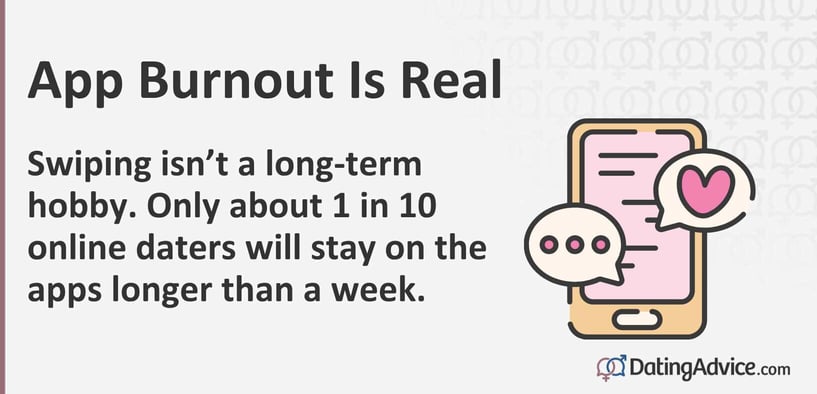
But don’t panic: 26% churn might sound pretty bad, but it isn’t unique to dating. Apps across every vertical struggle with user retention. People download an app out of curiosity or impulse, dislike the layout or see it as a time-waster, and delete it.
Even if only 26% of users stick around, enough people download dating apps that there are still plenty of users to go around.
2. Average Users Spend 11.49 Minutes Per Dating App Visit
Each time users open their dating apps, they tend to be there for a while. In 2025, the average user spent 11.49 minutes on a dating app per site visit3.
That might not sound like a ton of time, but for swipe-based apps where users can go through many profiles quickly, that’s a long time.
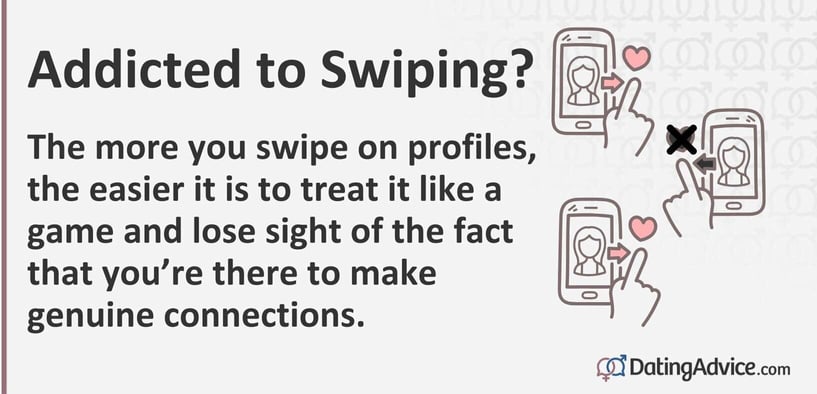
For better or worse, the way most dating apps function is somewhat addictive. Swiping itself is gamified. Looking through different profiles, thinking of who might be next, is fun. It’s easy to spend a long time on a dating app because most people enjoy the process of looking through profiles.
3. Active Users Spend 80 Minutes a Day on Dating Apps
The average active user (excluding inactive profiles) spends 80 minutes per day on dating apps4. That’s long enough for the average casual runner to run eight miles, and almost long enough to watch an episode of Stranger Things.
While you probably don’t need to spend an hour and a half each day to find success on dating apps, it’s understandable why people do.
It’s easy to open an app and swipe for a bit, like casually opening Instagram or TikTok. And it feels, sort of, productive.
If you find yourself spending hours on the apps each day, don’t beat yourself up about it, but know that there are diminishing returns.
4. After 12 Months, Only 1 in 20 Monthly Subscribers Remain Active
This might be good news, depending on how you look at it: People don’t tend to stay subscribed to dating apps forever. After 12 months, less than 5% of monthly subscriptions are still active5.
This could mean subscriptions work. After a year of paying for premium, dating app users have successfully done what they set out to do — fall in love.
The other possibility is that users don’t feel like they’re getting enough out of their subscriptions to keep them.
Both options are probably true – daters are not a monolith.
5. Over 50% of Subscribers Renew the 2nd & 3rd Cycles
There’s good evidence that subscribers end their dating app subscriptions only when they’re ready. According to Business of Apps, 69% of both weekly and monthly dating app subscribers renewed after the 2nd cycle, and 77% renewed for the 3rd cycle6.
This suggests that in the first few weeks or months of using an app, where we could reasonably assume that someone would be actively dating, their experience is positive enough to justify renewing, and they’re serious about making their time on the app count.
A more cynical view is that subscribers often forget to cancel the app on the second cycle. But the fact that the 3rd cycle actually has a higher retention rate suggests that this isn’t the case.
6. Of Online Daters, 26% Pay for Subscriptions
Increasingly, dating app users are willing – and to some extent, required – to pay. Of the 32% of the single U.S. population on dating apps, 26% pay for subscriptions7.
Opinions differ on whether payment actually renders a better service, but it does up the stakes for users to actually be active on the apps.
Having a financial stake in the game makes people want to get their money’s worth, and for singles concerned about their dating odds, a quarter of the population having financial skin in the game is a very good sign.
7. About a Third of People Have Used Dating Apps, But Aren’t Now
Online dating entered the mainstream in the 2010s, with Tinder launching in 20128. And now many young adults take it as a given. It’s normal to at least try an app.
About 34% of adults have tried online dating at some point, compared to the relatively consistent 10% using it now9.
When you consider that many adults have been in relationships since before online dating became an option, those are pretty high numbers.
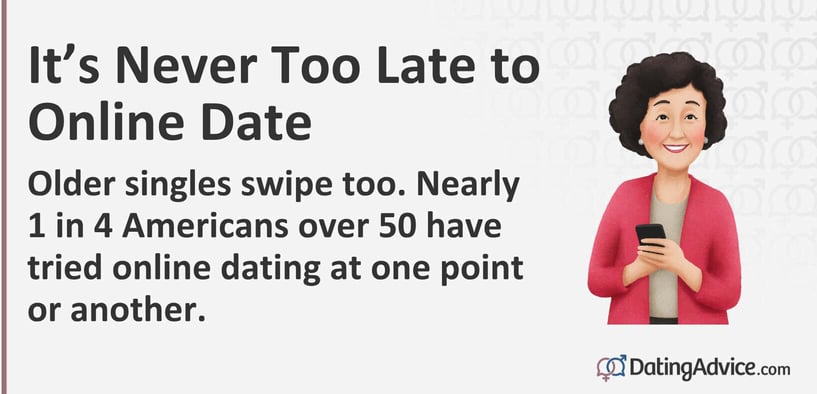
Looking at the big picture, it’s noteworthy that adults are more than three times more likely to have tried dating apps than to currently use them.
Most dating app professionals — especially those at relationship-driven apps like Hinge, eharmony, or Match — would tell you this is the goal. More people should have used dating apps, but not be actively on them anymore. Because that means the user found what they were looking for.
8. A Little Over Half of Tinder Users Open the App Daily
Say what you will about Tinder, but its users are engaged. Data Globe Hub reported that 56% of Tinder users are active daily10. That’s dedication. The only apps I open daily are Gmail and Messages!
Part of Tinder’s success may be its casual swiping tools. Using Tinder doesn’t feel like work. It feels exciting! There’s always another profile on the horizon, and that keeps users coming back day after day.
9. Between 2010 and 2023, User Sentiment About Hinge Dropped 36%
Even among the most popular dating apps (or maybe, especially among these), users are growing dissatisfied. A study found that user sentiment toward most dating apps declined, with Hinge experiencing the largest decline in positivity at 36%11.
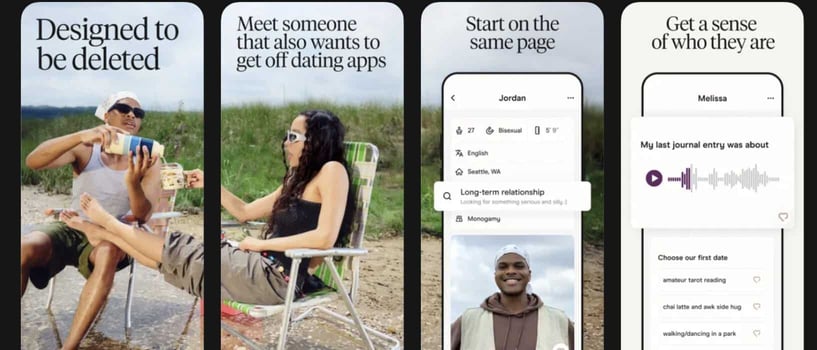
It’s hard to gauge how much user sentiment really matters if it isn’t clearly shifting behavior.
If anything, Hinge has become a more relevant dating app in the past 15 years. When I started online dating in 2019, I didn’t know anyone who used it. Now, it’s the only app many of my single friends use. Maybe it’s just lonely at the top.
10. Tinder’s Intent to Churn Has Increased 80%
Even when people don’t actually leave an app, they think about it. Infegy found through Themes data that users’ intent to leave Tinder increased 80% between 2021 and 2023, based on online comments12.
While the app is still sticking around, more people are considering whether it’s serving them.
FAQ: Is Churn a Good Thing in Online Dating?
Increased churn may sound inherently bad, but it isn’t necessarily. If people leave the apps because they find a relationship or they were never going to seriously date in the first place, that’s a good thing.
It becomes a cause for concern when people who are genuinely trying to date leave because they’re unhappy with how the app works or their lack of compatible matches.
Does Online Dating Really Work?
By this point, we have enough data to say with authority: Online dating does work.
As of 2021, more than 50% of couples met online13. The Knot found that 27% of engaged couples met through the apps14.
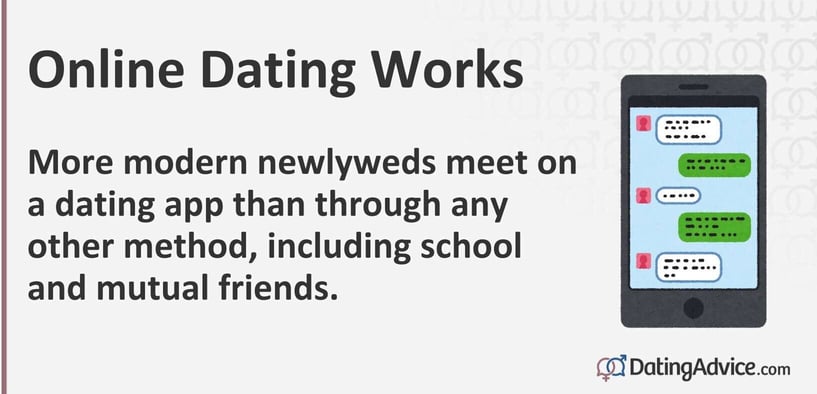
And those success stats are just for people looking for relationships; plenty of people find casual dating success online every day.
There isn’t some magic way – or wrong way – to meet someone. What matters for a relationship is not how you meet, but how you proceed after that first date.
How Many People Use Dating Apps?
Over 350 million people worldwide use dating apps, including 80 million in the U.S. alone15. About a third of U.S. adults have used a dating app, and that shoots up to 53% of singles aged 18 to 29 and down to 17% of those over 65.
As the population continues to age, I expect these numbers will only climb.
Dating App Churn is Real, But It May Not Matter
It’s undeniable: Most dating app users delete their apps almost immediately. For singles looking to actually give online dating their best go, that seems scary, and like there might not be anyone there.
But if you’re an online dater, the odds are still in your favor. Even with the majority of people leaving on day one, there are still millions of singles on the apps.
So don’t worry about whether other people hang onto their apps or not. There are plenty of lovely people willing to give online dating their all and find someone just like you. And once they do? Well, then you can delete your apps together.
Data Sources:
- https://www.pewresearch.org/short-reads/2023/02/02/key-findings-about-online-dating-in-the-u-s/ ↩︎
- https://www.adjust.com/blog/state-of-dating-apps/ ↩︎
- https://www.adjust.com/blog/state-of-dating-apps/ ↩︎
- https://www.businessofapps.com/data/dating-app-benchmarks/ ↩︎
- https://www.businessofapps.com/data/dating-app-benchmarks/ ↩︎
- https://www.businessofapps.com/data/dating-app-benchmarks/ ↩︎
- https://www.morganstanley.com/ideas/online-dating-2030 ↩︎
- https://www.datingadvice.com/online-dating/tinder-dating-statistics ↩︎
- https://www.morganstanley.com/ideas/online-dating-2030 ↩︎
- https://dataglobehub.com/tinder-data-and-insights/ ↩︎
- https://www.infegy.com/insight-brief/swipe-right-for-insights ↩︎
- https://www.infegy.com/insight-brief/swipe-right-for-insights ↩︎
- https://dailycitizen.focusonthefamily.com/most-american-couples-meet-online-survey-shows/ ↩︎
- https://www.theknot.com/content/online-dating-most-popular-way-to-meet-spouse ↩︎
- https://www.eharmony.com/online-dating-statistics/#fn2-3175 ↩︎