



How many times have you found yourself ghosting on a romantic interest? No judgment. I get it, breaking things off feels really uncomfortable. No one wants to be the bad guy.
It can be so hard to put rejection into words. Who likes to be the bearer of that bad news? It’s so much easier to disappear and move on without a conversation about it.
Ghosting has become the default behavior to avoid conflict in the dating scene.
But honestly, if we could just learn how to be direct and honest about how we feel, it could help save many people from confusion, self-doubt, and that awful feeling of not feeling good enough.
I’m going to show you exactly what to say to end things at every stage of dating, from the first few messages to months into a relationship.
Because breaking up with kindness isn’t just about them…it’s about being the type of person you respect.
Match Your Exit to the Time Investment
I believe the deeper the connection, the more direct communication you owe someone.
A few messages exchanged? I think a breakup text is fine.
Several months of Friday nights together? You need to have a real in-person conversation.
Think of it as a spectrum where the method of ending things should match the level of intimacy and time you’ve shared together.
Let me break down the different stages and what I think works at each level of dating.
When You’re Just Chatting Online and Lose Interest
Don’t you just hate when you’re chatting with someone and doing all the conversational work? They aren’t asking you any questions or trying to get to know you.
You get one-word answers from them. It’s like pulling teeth to get even that.
You’re just not feeling it, and there is no conversational chemistry. You know this connection is going nowhere, and you want to end it without ghosting them.
Ugh, this is the part of online dating that gets a little annoying. How the heck do you end things with someone you just started messaging?
I always recommend giving the courtesy of sending a short message to say goodbye.
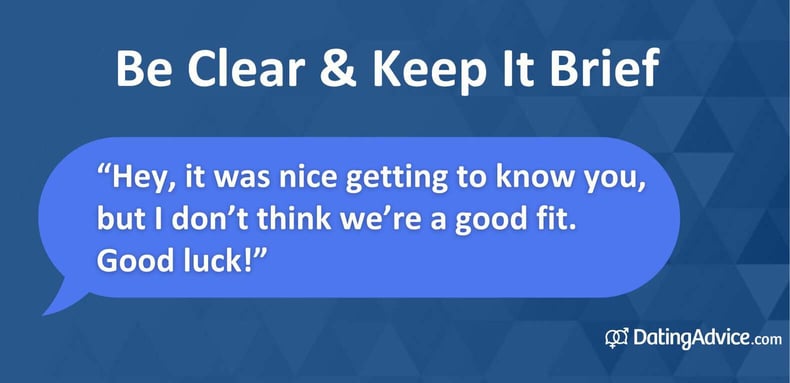
You don’t owe anyone a detailed explanation when you’ve only exchanged a few messages here and there. Keep it simple.
The goal is to be honest without being harsh, brief without being cold, and give them the closure to move on without wondering what happened.
When You’ve Been on a Few Dates & the Spark Fizzles
Now we’re at a different stage of dating. Maybe you’ve been out together a few times.
There was a lot of excitement at first, but all they do is keep talking about their dog or venting about their ex with no end in sight. For whatever reason, your dates are falling flat.
The chemistry seems to be fizzling, and you’re cringing at the idea of having to see this person again.
You’re probably wondering, how do I end things in a polite way? I totally think it’s okay to send a text during this stage of dating.
Of course, it would be way more considerate if you picked up the phone and called, especially if you had some sort of vulnerable connection with each other.
The key is to take initiative as soon as you aren’t feeling it anymore. Don’t wait until they’re texting you asking about weekend plans.
Send a message within a day or two of your last interaction. Or whenever you’ve realized it’s not working.
The goal is not to let things drag on. That only makes it worse for both of you.
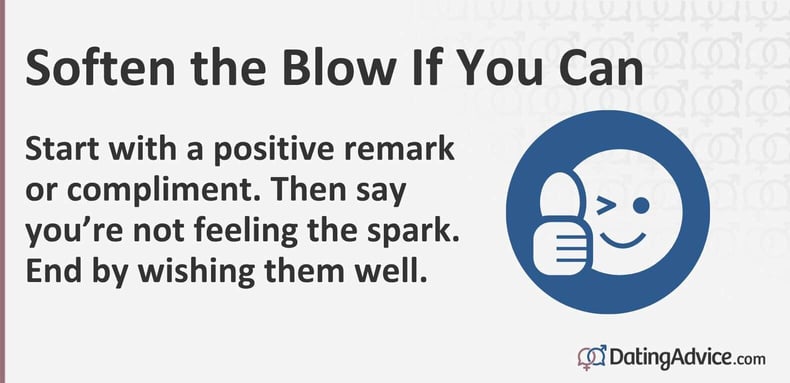
Here’s what you say:
“I’ve really enjoyed getting to know you over the past few weeks. You’re [insert genuine compliment about something specific], but I’m not feeling the connection I’m looking for. I wish you nothing but the best!”
I always recommend including a compliment because it acknowledges what was real and good about your time together, even if things didn’t work out.
You are showing respect for the time they spent getting to know you.
Here’s the thing, when you end relationships, some people will want more information and ask “why” questions.
As I said before, you don’t owe anyone an explanation on the details, but I DO suggest that you acknowledge their question with something like:
- “I don’t think I can pinpoint one specific thing… It’s just a feeling.”
- “Sometimes the connection’s just not there.”
- “I’m not sure we fit together well.”
Then let the conversation end. Don’t get pulled into an extended back-and-forth that becomes more painful for both of you.
When You’ve Dated for Several Months and Your Visions Don’t Align
At this point, this is a real relationship. This is a HARD conversation.
You’ve probably been integrated into each other’s lives. Met each other’s friends, family, spent weekends together, and planned future trips. This is the part that absolutely SUCKS!
There’s nothing more painful than realizing that your life goals, values, or visions for the future aren’t matching up in ways that matter. All that talk about children, and all of a sudden, they realize they don’t want any.
Or maybe you’re seeing that the differences in your approach to money, religion, or lifestyle are just completely different.
At this stage, a text breakup is not an option! I strongly recommend you have this conversation in person, or at the very least over a phone call if distance or your schedules don’t align.
This person has invested real time and emotion into building something with you; they deserve to hear your voice and have the opportunity for a real conversation, even if it’s painful.
Before you have this conversation, I suggest taking some time to prepare. Get clear on your reasons and write them down if it helps you organize your thoughts.
Choose a private, neutral location where you can both be comfortable and have space where emotions can be let out.
Be ready for questions, tears, anger, or attempts to negotiate and change your mind.
I know this is scary… but I know you can do it. Just begin the conversation.
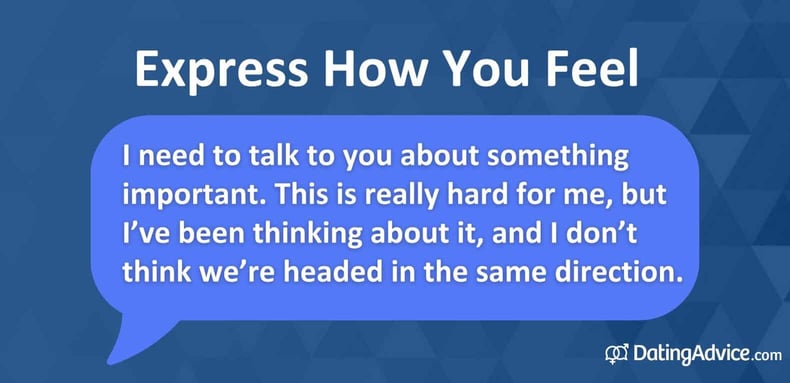
The more specific you can be about the incompatibility, the better. Why? Because when we’re vague, we leave room for hope and confusion.
Here are three examples of what you can say:
- “I’ve realized I want to live abroad and your commitment to staying near your family is making me realize our life visions are mismatched.”
- “Our values around money and financial planning are more different than I initially realized, and I don’t think either of us should compromise on these core values.”
- “I care about you deeply, but the more time we spend together, the clearer it becomes that we want different things from a partnership.”
It’s also important to acknowledge what the relationship has meant to you by saying something like:
- These past three months have meant a lot to me.
- You’ve taught me so much about patience and shown me what it means to really prioritize someone.
- This isn’t about you not being enough. It’s about us not being a good fit for each other in the long run.
This validation matters because it honors what was real and good, even though it has to end.
Then I recommend being clear and final.
If you’ve thought about this carefully, I suggest saying so:
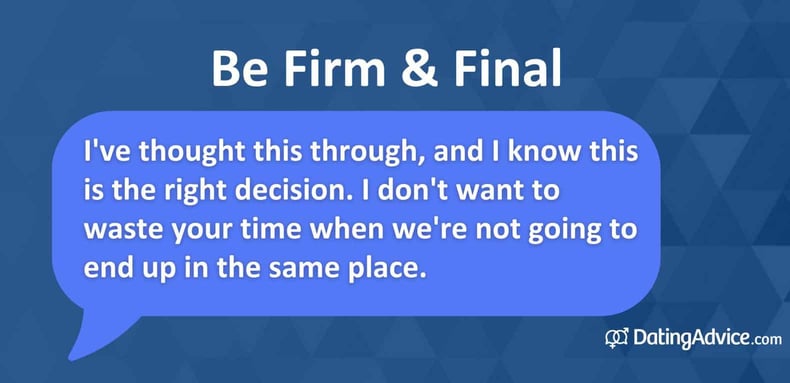
They may come at you with the idea of “trying harder,” but stand strong if your mind is made up.
You can listen to their feelings and answer their questions, but don’t drag out the conversation for hours rehashing the same points.
When Ghosting Is Okay
Everything I’ve said so far assumes you’re dealing with someone who treats you with basic respect and safety. But there’s an exception to the rule.
If you see any sign of abusive behavior in a relationship, it is absolutely okay to block and ghost the person. No explanation or closure needed. Your safety is the most important factor here.
And if you need help, I strongly recommend contacting domestic violence resources. The National Domestic Violence Hotline is available 24/7 at 1-800-799-7233.
The Truth Is Ghosting Hurts Feelings
It may feel easy, even tempting, to disappear. You don’t have to deal with the fallout of hurt feelings.
But the reality is, every time you ghost someone instead of being direct, you are saying that your discomfort is more important than treating people with respect.
Instead of ghosting, be honest about how you are feeling. Lean into the discomfort as an act of kindness, no matter the result.
Each time you do it, it gets a little easier, until one day you realize you’ve become someone who doesn’t run from hard conversations. You’ve become strong enough to face them.
You’ve got this. It won’t be easy, but I think doing the right thing rarely is.
And I can promise you this: On the other side of that uncomfortable conversation is the freedom of knowing you handled it with integrity.