


Infidelity is a nightmare scenario for people in a committed relationship. Such a betrayal can make it difficult to trust your partner… or future partners. Even if your relationship seemed wonderful before, you may feel that everything positive has been colored by the infidelity.
Not everyone encounters cheating in their relationships, but unfortunately, many do. Knowing a bit about how common cheating is, the reasons for cheating, and who is most likely to cheat can give you a better sense of how to spot the warning signs and decide how to proceed.
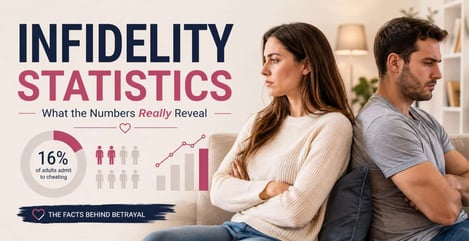
1. While Married, 16% of Adults Report Having an Affair
Popular culture makes it seem like cheating is an extremely common part of marriage, but the truth is, it’s an outlier. According to the Institute for Family Studies, 16% of married adults report having had sex with someone other than their spouse while married1.
My takeaway: The vast majority of couples have marriages that are free from infidelity.
2. Someone Who Cheats Once is 3X More Likely to Cheat Again
Once a cheater, always a cheater? A better phrase might be, “Once a cheater, often a cheater.” Research out of the University of Denver found that people who cheat once are three times more likely to cheat again.
Perhaps cheating once normalized the behavior for them. Perhaps they just can’t help themselves. They may generally struggle with impulse control, self-esteem, or other aspects of their mental health.
If you’ve cheated before, it doesn’t mean you’re damaged goods. You have control over your actions. Start working with a therapist to understand why you struggle to be faithful. Do the work to learn how to better honor your commitments to your future partners.
3. Men Are Nearly 2X as Likely to Physically Cheat
Not all men are cheaters, but men are more likely than women to cheat. Approximately 20% of men admit to sexually cheating on their spouses, compared to just 13% of women2.
While that gap is pretty significant, it actually used to be even worse, with men cheating at higher rates at the end of the 20th century and women cheating at lower rates.
4. Only 18% of Adults Over 65 Have Physically Cheated
The gender split on cheating is significant, but the difference between age groups is just as wide, suggesting that behaviors around fidelity may be generational. About 18% of those over age 65 have physically cheated on their spouses3.
Those over 65 also make up the demographic that experienced the highest rate of divorce4, and they are contributing to a wave of “gray divorce” in their golden years. It’s possible this generation experiences particularly turbulent or unhappy marriages compared to their kids and grandkids. Which brings me to the next statistic.
5. Just 11% of Adults Aged 18-34 Have Cheated on a Spouse
Younger adults are less likely than older adults to have cheated. Only 11% of married adults aged 18-34 admitted to cheating on their spouses5.
On one hand, younger adults have had less time to cheat on their spouses or grow restless in their marriages, which may explain why fewer of them have cheated. We can assume that some younger adults who haven’t cheated on their partners yet probably will in the future.
have cheated
on a spouse.
But, as a young adult, I’d argue there’s a generational difference at play here. Gen Zers like me are more likely to have gone to therapy6 and feel more comfortable talking about their feelings before getting to the point of wanting the stray.
6. At 44%, Unmarried Couples Are More Likely to Experience Infidelity
To all those who think cohabitating is the same as marriage, think again. Unmarried folks cheat at higher rates than married folks. Approximately 44% of unmarried couples experience infidelity, compared to between 18-25% of married couples7.
Infidelity might be more common for unmarried couples because some partners see their relationships as less serious and less deserving of commitment. Additionally, conflict and issues might come up early in a relationship, resulting in infidelity and the couple calling it quits long before walking down the aisle.
Cheating in a marriage is a lot more likely to blow up your life, which might make some would-be cheaters think a little harder before sending that flirty DM.
7. Over 9 in 10 Women Admit to Having an Emotional Affair
While having sex outside your marriage might not be too common, having an emotional affair definitely is. A shocking 91.6% of women and 78.6% of men admit to having emotional affairs at some point in their marriages8.
Those numbers are extremely high — there’s no doubt about it. But they don’t necessarily capture the full context of what an “emotional affair” means to different people.
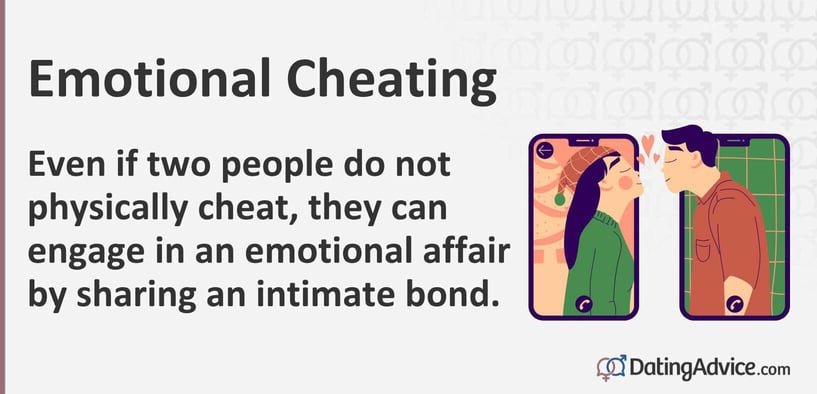
Some women, for instance, might consider having a small crush on a friend an emotional affair, even if they never do anything about it. Others may only consider emotional affairs those in which they have a genuine romantic relationship outside their marriage.
Either way, it’s worth discussing with your partner what you consider cheating before the relationship gets serious.
8. At 70%, the Top Reason Women Cheat Is Emotional Neglect
Most women don’t cheat to be cruel; they do it because they feel emotionally neglected. Experiencing emotional neglect was the reason 70% of women cited for their infidelity9.
Emotional neglect can start small, but over the years in a relationship, getting little emotional support and romantic attention from your partner can make you feel extremely lonely.
Emotional neglect doesn’t make cheating the right thing to do, by any means, but it does offer an explanation for why some women look outside their marriages for connection.
9. Half of Male Cheaters Cite Sexual Dissatisfaction as the Cause
Women cheat because of emotional disconnects in their marriages, but in large part, men cheat because they’re unhappy with sex in their marriages. A reported 50% of men cheat because of sexual dissatisfaction10.
Sexual dissatisfaction can sound like a shallow reason to step out of a marriage. But it can often be a sign of deeper issues with the marriage.
If two spouses dramatically disagree about how often they want to have sex, or worse yet, no longer want to have sex with each other, that can grow into a major source of discontent.
Cheating isn’t the answer, of course. Spouses should be able to talk openly about their intimacy and desires. Sex counseling is a potential solution as well.
10. About 23% of Social Media Users Admit to Online Cheating
It’s a bad idea to get too fixated on your partner’s social media usage. And yet 23% of social media users say they’ve used their accounts to pursue romantic connections outside of their relationships11. That could mean reigniting old flames or sliding into the DMs of new mutuals.
When it comes to cheating through social media, the lines between acceptable and unacceptable usage can get pretty blurry. Some people consider following models or porn actors to be cheating, while others have no issues with it. Couples have to set boundaries and rules that make sense for their relationship.
11. Between 60-75% of Couples Stick Together After Infidelity
Many people think of cheating as a relationship dealbreaker, no exceptions. And while that’s completely valid and works for some people, there is another line of thinking that says love is about forgiveness and offering grace. In reality, 60-75% of couples stay together after infidelity12.
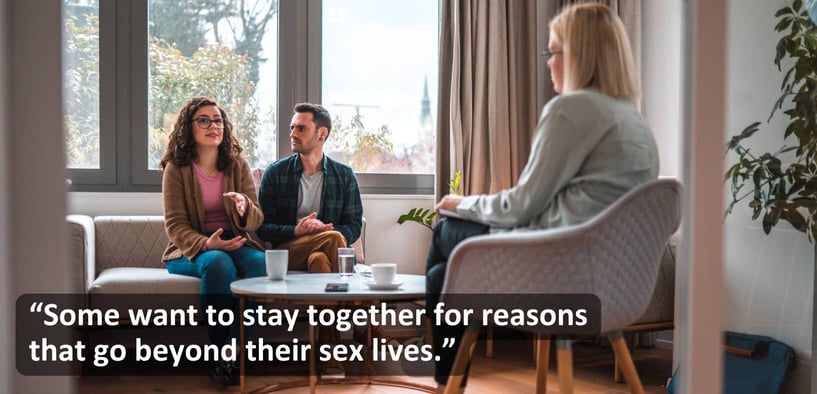
Every couple is unique, and some want to stay together for reasons that go beyond their sex lives. Sometimes they have children or financial ties that keep them together through thick and thin. Sometimes their faith tells them it’s better to work it out than say goodbye.
Many partners want to work through their issues and forgive each other. Others still will stay in relationships after infidelity simply because it’s important to them not to be alone.
There isn’t one right or wrong answer when it comes to whether you should stay with your partner after infidelity. Just be honest about what you’re feeling.
12. Of Married Individuals, 38% Report Using Social Media to Cheat
For 38% of married individuals, social media isn’t just about liking cute pics of dogs and keeping up with distant relatives. It’s about finding emotional connections that stray into the romantic realm.
A survey found that 38% of married people used their accounts on social media for emotional cheating13.
13. More Than 1 in 3 Social Media Affairs Occur on Instagram
Social media infidelity isn’t spread evenly among platforms. The plurality of social media cheating — 34%, to be exact — happens on Instagram14.
There are several factors that make Instagram a popular home for affairs. For one, it’s an extremely popular account to be on, meaning that most people you know in real life, including past romantic partners, are likely on it.
Because you can send DMs, like photos, or DM an account in response to their stories, there’s a gradient of how direct you can be about hitting on someone, depending on the situation.
14. Infidelity Peaked in the 1990s, with 31% of Older Men Cheating
Despite what some people say, we are not in an epidemic of infidelity; that happened in the 1990s. During that time, 31% of men aged 50-59 admitted to having cheated, and 18% of women aged 40-49, the highest numbers recorded for any age group in their gender15.
The 1990s were a turbulent time for American marriages, and increased infidelity was absolutely a part of that. Men and women often experienced disagreements in their marriages over their roles and the types of connection they wanted from each other, which made divorce — and betrayal — far more common for a time.
15. Survey Says 40% of Workers Have Cheated With a Coworker
Calling your coworker your “work wife” might not be so innocent. A significant number of affairs start where most people spend the majority of their days: at work.
As many as 40% of workers admit to cheating on their partner with someone from work16.
As remote work becomes more commonplace, we’ll have to watch how the virtual office reshapes workplace infidelity and relationships more generally. I’m going to hazard a guess that workplace affairs become rarer. You’re probably a lot less likely to have an affair with your coworker when you’ve never met in person.
Moving Forward From Infidelity
Whether you’re the cheater, the one being cheated on, or even the affair partner, it’s never easy to know the best way to move forward after infidelity. Some might want to call the relationship quits immediately, but for most people, especially those who are married, it isn’t that simple.
People can change, but it requires a lot of hard emotional work. After infidelity, something in your relationship likely needs to change. That might mean breaking up, but that also might mean attending couples counseling and engaging in honest conversations to see if you can make it to the other side.
- https://ifstudies.org/blog/who-cheats-more-the-demographics-of-cheating-in-america ↩︎
- https://ifstudies.org/blog/who-cheats-more-the-demographics-of-cheating-in-america ↩︎
- https://ifstudies.org/blog/who-cheats-more-the-demographics-of-cheating-in-america ↩︎
- https://www.datingadvice.com/studies/divorce-statistics ↩︎
- https://ifstudies.org/blog/who-cheats-more-the-demographics-of-cheating-in-america ↩︎
- https://red.msudenver.edu/2024/how-gen-z-is-shaping-a-new-era-of-mental-health-care ↩︎
- https://www.southdenvertherapy.com/blog/infidelity-statistics-2026 ↩︎
- https://www.southdenvertherapy.com/blog/infidelity-statistics-2026 ↩︎
- https://www.southdenvertherapy.com/blog/infidelity-statistics-2026 ↩︎
- https://www.southdenvertherapy.com/blog/infidelity-statistics-2026 ↩︎
- https://cheatscanx.com/blog/social-media-cheating-statistics/#section-1 ↩︎
- https://www.hli.org/resources/percentage-of-relationships-that-work-after-cheating/ ↩︎
- https://cheatscanx.com/blog/social-media-cheating-statistics/#section-1 ↩︎
- https://cheatscanx.com/blog/social-media-cheating-statistics/#section-1 ↩︎
- https://ifstudies.org/blog/who-cheats-more-the-demographics-of-cheating-in-america ↩︎
- https://www.forbes.com/advisor/business/workplace-romance-statistics/ ↩︎