



Clients frequently come to me with questions about polyamory and ethical non-monogamy: how it works, whether it’s right for them, how they should approach it, or how to navigate dating non-monogamous people.
Solo polyamory is often a novel concept for my clients, but one that I think is useful and rewarding to learn more about.
Whether you ultimately identify as solo poly or not, it’s a great case study on how polyamory can work. You can think through what you actually want in your dating and romantic life and how your ideal relationship structure might look. Here’s what you need to know about solo polyamory:
What Is Solo Polyamory?
Solo polyamory refers to an approach to polyamory where there is no primary partnership at the core of an individual’s romantic life. Rather, they see themselves as the center of their romantic and sexual life (and may think of themselves as their own primary partner).
Often attributed to blogger and journalist Amy Gahran (who just so happens to be the founder of solopoly.net), solo polyamory is a unique framework and approach to relationships within the broader umbrella of non-monogamy, or polyamory.
Many of us, when we think of polyamory or ethical non-monogamy, imagine someone with a serious long-term partnership (aka a primary partner) who then dates other people outside that primary partnership.
Solo polyamory often prioritizes autonomy and independence. Practitioners of solo polyamory may feel it’s important to do many of the life milestones people associate with partnership — home ownership, having children, or travel — independently rather than with a partner.
That doesn’t mean solo poly people live an isolated life. They often are seeking romantic and sexual connection with others, but not in the form of a traditional primary relationship.
A solo poly person might easily have three partners or five dates scheduled with five different people, but they may also have their own bank account, live alone or platonically with roommates, or be scheduling fertility treatments to begin solo family planning.
What Does Solo Polyamory Look Like?
The concept behind solo polyamory is simple. It means centering your life around yourself, not a romantic partner. You come first, regardless of your relationship status or sexual activities.
Now, I know a lot of people with a lot of different relationship styles can choose to prioritize themselves, so what’s unique about how solo polyamory works in real terms?
A person who practices solo polyamory might:
- Live alone or with roommates, while also having a serious partner(s)
- Have a serious romantic connection(s) but intentionally keeping finances separate
- Have partners that they see every week, and some partner(s) that they see monthly or less frequently
- Have “comet” partners who are long-distance and who are only seen on occasion
- Have dates or partners who share specific parts of their life, like traveling or specific sexual subcultures
- Have dates and partners with very different dynamics and levels of intimacy
- Make major life decisions (career, where to live, starting a family, etc) alone without a partner’s input
- Raise children as a single parent, either without coparents or multiple coparents
You’ll notice that all these scenarios are very different from each other. Because solo polyamory isn’t about staying in a traditional “this is how dating works” box. It’s about exploring and doing what’s right for you.
Benefits & Challenges of Solo Polyamory
Like any relationship structure — including monogamy — there are exciting and challenging parts of the solo poly experience.
The Benefits
People who practice solo polyamory often love the independence and autonomy it offers — it’s a lifestyle that allows for a lot of love and connection in your life without the restriction of needing to check in or get consensus from a partner for decisions like changing careers or starting a family.
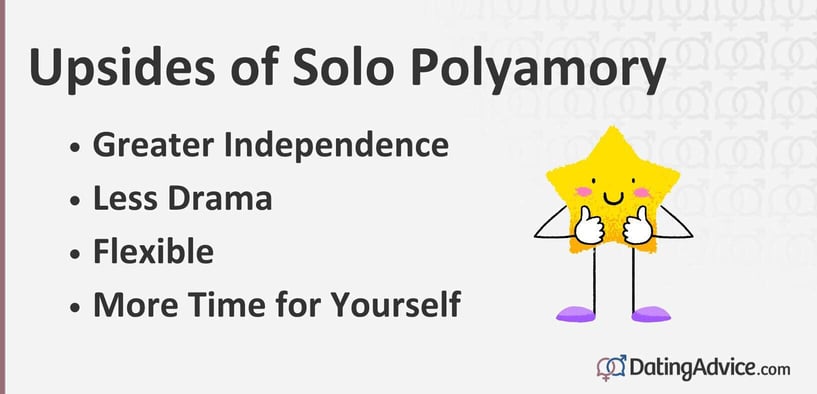
For many people, it also offers an amount of space and freedom they appreciate. It can feel great to spend the day with a serious partner you care about a lot, and also great to go home to your own house where everything is just how you like it and sleep alone in your own bed at the end of the day.
As is the case with many polyamorous people, people who practice solo polyamory feel freedom and relief at “getting off the relationship escalator” — not being beholden to a specific set of milestones that every relationship must pass through to be considered legitimate, from first date to moving in together to marriage.
The Challenges
Solo polyamory also encompasses many downsides common in polyamorous dating life. It takes work to manage sexual and romantic jealousy. It’s sometimes difficult to balance different relationships and romantic connections.
Some people may experience burnout or saturation from the various connections they’re maintaining. While not having a primary partner may help with this, it doesn’t remove the possibility.
Not having a primary partner has its own challenges. While it may feel like a relief to go home alone most of the time, there are times it may feel lonely to lead a nontraditional romantic life. When going through major life transitions like loss or grief, it can feel difficult not to have a primary partner by your side.
There are tradeoffs and unique compromises to every kind of relationship structure. But for those who practice solo polyamory, these tradeoffs are all worth it.
Myths & Misunderstandings About Solo Polyamory
Solo polyamory is hardly common, and it definitely hasn’t gotten into the vernacular the way “ethical non-monogamy” has. So it comes as no surprise that certain misconceptions have arisen around it. I’m here to bust those myths.
Solo Polyamory Isn’t the Same Thing as Being Single
People who practice solo polyamory aren’t just single, depending on your definition of “single.” It’s true that solely poly people don’t have a singular life partner, and may not have a “primary partner,” “anchor partner,” or “nesting partner” as some other poly people might.
Many think of themselves as their own primary partner.
However, many solo poly people have a rich and dynamic network of relationships of varying levels of intensity, seriousness, and commitment. People who practice solo polyamory may consider themselves their own primary partner rather than considering themselves single.
A single person, even a polyamorous single person, may be looking to find a primary partner in the future — a solo poly person isn’t.
Solo Polyamory Isn’t Relationship Anarchy
It’s easy to conflate solo polyamory — pursuing multiple romantic or sexual connections without the intent to center one’s life around any one of them — with relationship anarchy, the rejection of traditional relationship hierarchies and commitment to highly personalized relationship structures.
These lifestyles both prioritize autonomy and independence, and the dating life of someone practicing solo poly might look similar to that of a person practicing relationship anarchy (and the same person might identify as practicing both).
However, the two lifestyles and philosophies aren’t the same thing — someone practicing solo polyamory specifically doesn’t want a primary partner(s), while someone practicing relationship anarchy may well have arrangements that function like primary partnerships, even if they are unique to the people and dynamics they are based in.
Solo Polyamory Isn’t Just Casual Dating
To some, solo polyamory can sound a lot like just regular casual dating — after all, you’re seeing different people and don’t have a singular partner, right?
While the confusion is understandable, there are a few major differences. Many (though not all) monogamous people who are dating casually are doing so on a temporary basis, often “until the right person comes along.” A primary partnership is still a goal.
Furthermore, the connections they’re making are, by definition, casual ones. For someone practicing solo polyamory, they don’t intend to eventually “move on” to more serious singular partnerships, and likely view it as a lifestyle. In fact, though the romantic connections they have aren’t primary partnerships, they aren’t necessarily casual, either, and can be very emotionally involved and committed.
Solo Polyamory Isn’t Just a Fear of Commitment
What’s the difference between solo polyamory and regular old avoidant attachment or fear of commitment? While people who practice solo polyamory may not have a primary partner, that doesn’t mean they don’t have relationships — even quite serious or committed ones.
Solo polyamory prioritizes autonomy, but doesn’t necessarily mean losing out on emotional intimacy or serious connections.
Is Solo Polyamory Right for You?
If you’re interested in (or experienced with) non-monogamy but find yourself yearning for more freedom, autonomy, or independence, solo polyamory might be the right fit for you. It can be helpful to meditate on what the idea of primary partnership means to you.
- Does the idea of having a primary partner feel more affirming…or more restrictive?
- When you think about the shape of your ideal relationships, do they include sharing life milestones or materially enmeshing with each other in the form of property or finances?
- What makes a relationship feel important, meaningful, or worthwhile to you?
- When you imagine someone you’re dating seeing someone else, do you feel jealousy? Or excitement?
While there’s no one litmus test to know whether solo poly is a good fit for you, thinking through the answers to these questions can help provide clarity and direction.