



To date a coworker or not date a coworker, that is the question. From 1983 to 2007, the second-most common way of finding a partner was at work (the #1 way was through friends). To this day, it continues to be the third most popular way to find a mate, with online dating taking it over since 2010.
And yet, the advice I always hear is “Never date a coworker!” (Or “Never buy meat where you buy bread,” “Don’t dip your pen in the company’s ink,” and of course, “Don’t s#!% where you eat.”)
As someone who has had lots of different jobs in many different environments, I have hooked up with coworkers somewhere between “DEFINITELY not 0%” to “probably not 100%.”
And you know what? Very few of them became difficult or weird.
If you do your due diligence, the workplace can be a great place to meet a future partner. But if you do it wrong, you could be iced out of your workplace — or worse. So, let’s go over some dos and don’ts of dating coworkers.
1. Do Know Your Workplace’s Policy
I’ve worked everywhere on the spectrum of strict to loose policies at work. From “Document everything and submit it to HR” to “Don’t be too high to wait on the customers, and your manager is drunk.”
If there is an employee handbook or a written policy online, read it and be sure of what it says. Even if you do have an HR, it’s mainly for saving the company’s face, not looking out for you.
“I started dating a guy from a seasonal job I had. Been together 11 years, married for 7.” – u/toesandtattoos55
If there isn’t a handbook or policy, then ask some of the folks who have been there the longest. They are usually the best ones to help you understand both the written and unwritten rules. And if there are no policies in place, that usually means they can let you go at any time, so be careful.
2. Do Weigh Your Options & Make Sure It’s Worth It
Is the juice worth the squeeze? Do the potential good things outweigh the possible bad things? It’s impossible to know exactly, as we can’t tell the future, but it’s important to at least try your best to think things through.
For instance, if you have been looking for a job for six months, after sending out 1,000 resumes, and you finally landed your dream job, you might want to take it slow. Maybe nothing is worth the risk of getting off your career track.
3. Do Be Smart About the Risks
On the other side, if you have a job that you’re not in love with or is easily changeable (like when I worked as a waiter) and the most amazing woman you’ve ever met walks in, it could definitely be worth the risk.
Of course, I am biased, but finding the person to be with for a long time is worth almost anything to me. I wouldn’t want to risk her being “the one that got away” because I was trying to be loyal to my company… only to get laid off a year later during budget cuts.
4. Do Take It Slow & Be Professional
If you have decided to take the risky plunge into a workplace romance, make sure you give yourself the best odds of it working out the way you want.
Do not use work hours to shoot your shot. If you think you are sensing some chemistry, ask her to grab a coffee or something outside of work.
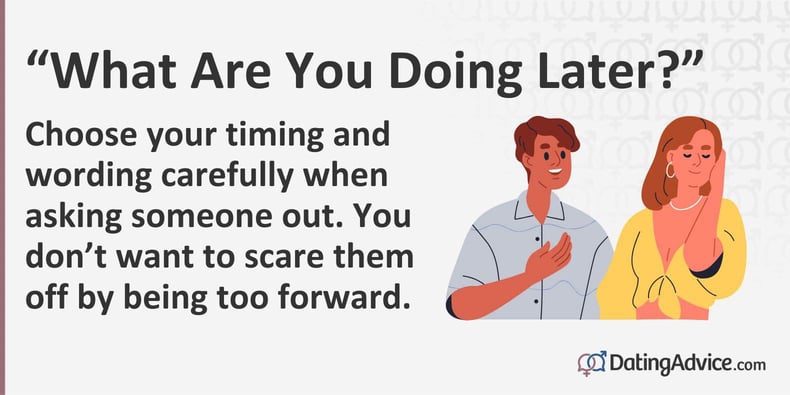
If there are group happy hours or work parties, say some neutral but good-sounding things like, “It’s so much fun chatting with you outside of work, let me know if you’d ever like to do this again sometime.”
If you do end up dating, you have to put on a play at work that you are not dating. You need to act no different than before.
No canoodling in the corners or anything that could get unwanted eyes on you. No one should think you are favoring them in any way.
People are always looking for gossip, and you don’t want the rumor mill flaying you two. When it’s time, tell a superior or a manager so they can understand what’s going on.
Advantages of dating a coworker:
- Opportunity — you spend most of your time there
- Start as friends/colleagues — your relationship can grow organically
- See them in all situations — you know how they will act in most situations
- WORK SEX! — ‘Nuff said, but be careful
“My first night on the job, I walked into the break room and saw him sitting there. The voice in my head said, ‘That’s the person you’re going to marry,'” according to a Reddit post by u/magnetic marbles.
“One night we were working grave shift alone with one other manager. The manager asked us to guess who was singing the song on the radio for $20. It was a slow song sung by a lady, and I immediately blurted out, ‘it’s G-Unit.’ My crush looked at me and laughed his ass off, and I melted. And that was all it took.”
“Turned out he had a crush on me too, and avoided me because I made him nervous. 10 years together, 2 kids, married, dog, every day seems surreal. Though we don’t work together anymore, but that’s for the best. Coworkers get really weird when you take someone off the map.”
5. Don’t Harass, Discriminate, or Retaliate
You have to be very careful trying to date in the workplace without running afoul of policies, rules, and laws. Most places have an “Ask once and that’s it” policy, so if you’ve tried to ask someone out and they say “No,” that’s the end of it.
If you keep trying or pestering, it can be considered harassment, and you could be subject to arrest or being fired.
And if they say “No,” you must be the bigger person and not treat them any differently. You can’t withhold work or promotions or start vicious rumors. You tried, it didn’t work, time to move on.
I’ve heard of nightmare situations where exes take their personal grievances out on each other. Sometimes colleagues get in on it too, and it quickly becomes a toxic work environment.
6. Don’t Spend Too Much Time Together at Work
Since you work together, it’s natural to want to spend that time together as well. If it’s simply eating lunch together or stopping by a desk to chat and catch up, that’s fine.
But if you are always together, not only will everyone know, but people will start to feel uncomfortable. It can make people not want to chat with you. You may stop being asked to be on projects or to socialize if you two are just swooning over each other.
“Trying to lose feelings for someone that you have to see every day at work is almost impossible,” concluded u/smart_weekend2420 on a seven-month workplace FWB situationship. “It taught me that just because you can spend so much time (both intimate or not) with someone doesn’t guarantee that they will catch feelings for you. It was very humbling. Proceed with caution!”
7. Don’t Bring Your Relationship to Your Work
Do not engage in PDA at work. No one wants to see Ahmed from packaging and Maria from reception, up against a wall whispering sweet nothings into each other’s ears.
That stuff is not only frowned on, but could easily get you fired. And if you do decide to risk office sex, just know where the cameras are. That’s very important.
Likewise, don’t bring in your relationship problems. Coworkers don’t want to be in the middle of your spats.
Potential problems of dating a coworker:
- You get arrested, fired, or ostracized
- You become workplace gossip
- One of you may have to switch jobs if you break up
- Weird feelings of hate or jealousy from coworkers
I can just tell when a couple is giving each other the cold shoulder, and it just makes everyone around uncomfortable. Then people start picking sides like we’re back in middle school. Be an adult and keep work professional.
“We fought every week. I sadly still have feelings even with our incompatibilities. He sits in the cubicle behind me, which makes it feel like I’m in hell every day,” wrote u/thin-acanthisitta625 about their workplace breakup. “One thing’s for sure, never dating a coworker again.”
You May Not Have a Handbook
Before we sign off, I’d like to make a quick point here. So much advice on this subject refers to “HR or Human Resources or employee manual.”
But there’s a weird bias here, as this advice may not work for most American workers. If we go with the number that any company with 100 or more employees has an HR department, 98% of US companies have less than 100 people, 90% have less than 20 people, and 79% have less than 10 employees.
If you’re in a company of just 10 people, you likely do not have an employee handbook. So this whole “Go talk to HR” thing is a bit… simplistic. In my mind, this is a complete last resort for most of us in the modern workplace. But the general guidelines still apply — be respectful, ask once, and if they say no, move on.