


The big dating apps have millions of people looking for a match. Tinder, for example, has 60 million monthly users. Browsing that big of a pool without filters would mean hours of time wasted on people who ultimately don’t check your boxes.
Filters aren’t about being a snob. They’re about prioritizing what you want and saving your time and energy for matches that might just actually work. When done right, it can speed up the online dating process and prevent burnout.
I met my husband on Hinge, but it took me a couple of years because I started out with no idea of how to use filters. So I didn’t really use them. I was open to everybody and talking to guys who had wildly different interests and values. And, surprise surprise, those situationships didn’t pan out.
Over time, I learned to be more decisive. It just took me some trial and error. I’m hoping this article helps you skip the error part and go right to making successful matches in the online dating scene.
What Are Online Dating Filters Like?
Filters vary from site to site — some sites might emphasize filters based on lifestyle, while others focus on location or looks.
Here are some of the most common filters I’ve seen across the apps:
- Age range: This is pretty basic, and usually it’ll automatically suggest a range close to your age to start out. You can change it to anything, but I’d say give a range of about 10 years to avoid being too closed off.
- Distance/location: Do you have a car? How far are you willing to travel to meet someone? Distance filters allow you to set a mile radius for where you want your date to be located.
- Gender and orientation: This is pretty basic and almost always mandatory, for obvious reasons. Not all sites allow you to change this filter, but some sites like AdultFriendFinder have genderqueer, pansexual, and fluid options.
- Relationship goals: Whether you are looking for a serious relationship or a fun fling, most dating apps allow you to indicate what you want.
- Lifestyle habits: Is it important for you to match with a nonsmoker? A pet owner? Mariajuan usage can be a dealbreaker, too.
- Religious beliefs: If dating someone of a similar religious background is of utmost importance to you, I would recommend a religion-forward dating site like Jdate or Muzz. But if religion is one of many priorities, use religious filters on non-religious dating apps!
- Family plans: We’ve all heard of the line, “We were great together, but I wanted kids and they didn’t.” This is an important one to pay attention to.
Filters can be useful for giving the match algorithm a rough idea of compatibility factors that matter to you. It’s a good way to ensure you only pursue connections with people who match your lifestyle, interests, and values.
How to Use Dating Filters Strategically
“Too much of a good thing” can apply to dating filters. Here are my tips for using dating filters to your advantage so that you can get better matches faster…without filtering anyone good out.
Start Broad, Then Narrow Down
I know it’s tempting to use dating filters like they’re a menu, and you’re ordering up a dream date. I’d like a 6’3” dog lover with a college degree and no smoking habits. And he should have blond hair and want children too. Must live within five miles.
Hate to break it to you, but that dream guy is truly just a dream. Using too many filters is going to be too limiting, even in the biggest dating pools.
Yes, it’s important to know what you want, but be open to the possibility that your most compatible match might be someone who surprises you!
That’s why I recommend starting with only the three necessary filters – age, location, and gender. That’ll get you some basic match recommendations, and you can see the general profile quality before narrowing it down further.
Next Prioritize Dealbreakers
After you’ve spent a good few minutes swiping through everyone, you might start feeling the first twinges of fatigue. Are you swiping left more than right? Then it’s time to make some adjustments.
Ask yourself: What are your dealbreakers? What qualities are you looking for in a partner?
Know the difference between your preferences and your requirements in dating.
For example, you might prefer dating someone who shares similar religious beliefs, but if you’re open to differences in opinions and don’t mind participating in new traditions or holidays, this might not be a dealbreaker in a relationship.
On the other hand, if you have asthma, dating a smoker might truly be unworkable for you…because you can’t compromise on breathing.
My pro tip is to use filters for things that are requirements and leave some leeway on the preferences. Imagine your dream person, and then imagine that they have that one mismatched quality. Would you still date them? Or would you end things just for that one must-have trait?
Revisit Filters Regularly
I know that this can feel like a weighty decision. But the good news is that filters aren’t permanent! You can (and should) play around with them and continually adjust until you find your sweet spot.
I would recommend updating your filters at least on a monthly, if not weekly, basis because it can be good to mix things up and let the algorithm explore new subgroups for you.
Continually adjust until you find your sweet spot.
If you’re finding your match list keeps running out of options or showing the same profiles again and again, it’s time to widen your search and uncheck some filters. If you’re seeing a lot of common icks when swiping, see if a filter helps.
I encourage you to have fun with it and take the time to learn what works best for you!
Common Dating Filter Mistakes to Avoid
Finding matches while online dating sometimes takes a trial-and-error approach. But, like I said earlier, I want to help you avoid errors as much as possible. I’ll go over some common missteps I see online daters make when it comes to filters.
Using Too Many Filters
I’ve talked about this before, but it really can be a fatal flaw in a person’s online dating strategy. Using every single filter the app has to offer may not be in your best interest. Dating is a numbers game.
You don’t want to shrink your dating pool any more than is absolutely necessary. Piling on filters is going to weed out a ton of people, and some of them just might be a catch you didn’t expect.
Broader filters lead to more match options. You want to give yourself options.
Ignoring the Importance of Shared Values
Some dating apps allow you to filter users based on physical attributes (hair color, eye color, tattoos, ethnicity).
On the affair site VictoriaMilan, weight and height are mandatory profile fields. There are filters by looks, turn-ons, hair color, body type, and attractiveness.
I see these filters as the sirens of online dating. Oh so tempting, but are you really going to find satisfaction that way? Physical attractiveness is just one piece of the puzzle.
Superficial filters might be useful on casual dating sites, but they can hamper the experience of seeking a true life partner. Don’t use a short-term factor to make a long-term decision. Looks change over time, and who you’re attracted to can change as well.
These are often preferences, not dealbreakers, whereas having shared values and family goals makes more of a difference. Sometimes looks can matter, but it’s not necessary to make a loving connection. Just ask the cast of “Love Is Blind.”
Never Updating Preferences
Too often, people will set their filters when they first join the dating app, and then never think of them again. It might not be an issue at first. The matches might be exactly what they hoped. But over time, that well is going to run dry, or their preferences could change.
Maybe you were a very social drinker when you first joined the app, but now you’re more into your career and only crack open a beer on special occasions. Maybe your relationship with your faith has changed.
Every few months, take a look at your filters and ask yourself if they’re still aligned with what you want.
Dating Filters on Popular Dating Apps
Some filters are free upon joining, and others require a paid upgrade. It’s worth knowing the difference.
Here’s a breakdown of the filters available for free on some of the most popular dating apps:
| Dating App | Free Filters | Paid Filters |
|---|---|---|
| Match | Distance, ZIP code, age range, has kids, wants kids, online now. | Education, ethnicity, weight, height, interests, faith, politics, keyword search. |
| eharmony | U.S. state, age, height, has kids, wants kids. | Education, ethnicity, smoking habits, income, distance. |
| Tinder | Distance in miles, age range, gender, verified photos. | Height, relationship goals, pets, smoking habits, drinking habits. |
| Hinge | Age range, distance in miles, religion, preferred relationship type. | Height, politics, has children, family goals, education level. |
| Bumble | Distance, interests, verification status, language, ethnicity. | Height, exercise level, politics, faith, dating intentions, substance use, family goals. |
Both Match and Hinge have the option to mark a filter as a “Must Have,” which means profiles without it will be excluded from the list. If you don’t mark this box, the algorithm will treat it more as “nice to have.”
Serious daters may want to think about upgrading to use paid filters because it can really accelerate and streamline the swipe options.
FAQs: Are Premium Filters Worth Paying For?
It depends! If you’re serious about finding a long-term partner, paying for premium on apps like eharmony might be worth it. But if you’re getting your needs met through a free account with Hinge, I say skip the subscription for the first two weeks.
Which Dating App Has the Best Filters?
Again, this depends on your dating intentions!
If you’re looking for a serious relationship, I’ve found the search features on Match to be the most effective, especially for premium members. The specificity of the search feature works in your favor, and you can even do a keyword search for profiles that mention things your interested.
For those just interested in casual dating, I love the versatility of the search filters on Fling.com. It isn’t all superficial stuff, either. The filters include:
- Location by country, ZIP code, city, or distance radius.
- Age range
- Gender (nonbinary and couples included as well)
- Interests (up to 5 tags)
- Keyword search
- Eye color
- Body type
- Hair color
- Ethnicity
- Religion
- Languages
- Marital status
- Income
- Profession
And, as if that weren’t comprehensive enough, you can filter by who’s online now, has a verified photo, or has a photo at all.
What Filters Are Best for a Serious Relationship?
Relationship seekers are often looking deeper than the surface. They’ve got an eye on the future, and they need a partner who is going to serve that vision.
Family goals are going to be a big one here. You can’t very well marry and start a family with someone who doesn’t want either of those things.
Politics might be something to consider filtering for as well. Though our online dating expert Julie Spira warns against using politics as a shortcut to values because political leanings can change over time.
Should I Filter by Education or Income?
Again, it’s up to you to decide how important this is to you.
For me, education was my go-to filter – I had already received my master’s degree, and it was important for me to match with people who were similarly invested in their education. That’s how I met my husband on Hinge while he was getting his PhD in engineering!
I recommend using education and income filters to find common ground. Look for people with similar backgrounds.
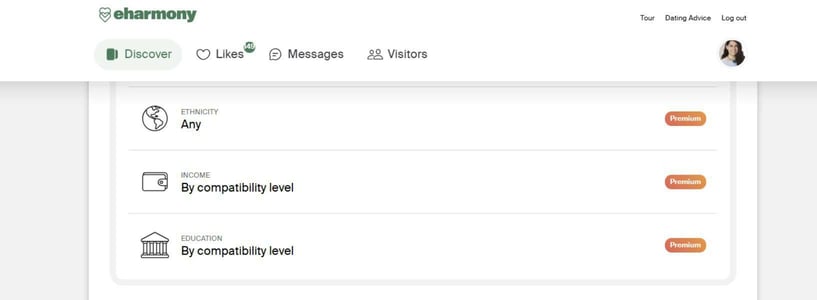
If you’re aspiring to date in a different tax bracket, consider what value you’re bringing to the relationship and what commonalities you expect to build. How will you navigate the challenges of class differences? Why is money a dealbreaker?
If You’ve Got a Type, Dating Filters Matter
Only you know what your priorities are when it comes to dating. Maybe you’re in it for the adventure. Maybe you don’t quite know what you want and don’t want to limit yourself. Or maybe you have a very clear vision and need filters that align with you.
It’s all about maintaining a good balance. Keep your non-negotiables in mind, but don’t let them rule your swiping and box you in too much.
Next time you find yourself swiping endlessly with no satisfying profiles on the horizon, try revisiting your filters. Experiment with them. And who knows, you might just find someone who’s exactly your type!