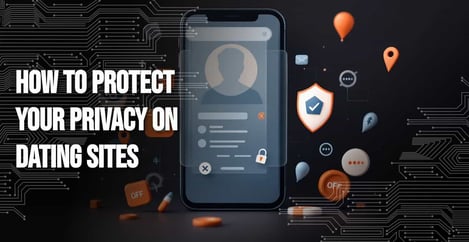


With something as vulnerable as your dating life, safety should always be top of mind. I think we’ve all encountered suspicious characters online or gotten spam texts that made us want to shut and lock the digital doors to our private lives.
Actively protecting your privacy when online dating can be the difference between falling in love and getting scammed.
Data breaches, fake profiles, harassment, and scammers are avoidable when you know what red flags to look for and how to guard your information.
To be clear, I am of the belief that most dating sites — which 37% of U.S. adults have used at some point in their lives — are legitimate places to meet new people. Not only did I meet my husband on Hinge, but I’ve reviewed dozens of platforms and never lost one penny to a scam.
How Dating Sites Handle Your Data
It’s important to understand what personal information you share with dating sites when creating an account. Dating apps don’t only collect your data; they can profit off it by selling your information to third-party advertisers.
What Information Dating Apps Collect
First, it’s good to consider what you’re giving to the app when you join. How much information about yourself is going to be up for grabs?
● Profile details: Name, age, religion, education, income, pronouns, and relationship preferences.
● Behavioral data: Who you swipe right on, how frequently you log in, and what times you’re active.
● Location: Some apps ask for a city or ZIP code, and some automatically take your real-time location using GPS data.
There are many legit reasons that dating apps need this data. For example, it’s easier to match you with local singles when the algorithm knows where you are. But it may give pause to those who don’t want a tech company up in their business.
How Your Data Can Be Used
Your data is valuable, and it can be used in a variety of ways by an online dating company.
Matching Algorithms
As I mentioned before, a dating app will use the information on your profile to feed their matching algorithm. This increases the likelihood of a successful match.
Advertising & Monetization
Dating sites don’t just use your data internally. Your profile details and behavior on the site can be used to inform which ads are shown to you.
Match Media Group (which owns Tinder, Hinge, and Match, among others) boasts “innovative advertising solutions that reach highly engaged audiences.”
Companies can purchase ads that target particular users as they swipe. For example, if you’re a senior Christian, you might see ads for a local church or retirement community.
Data Sharing With Partners
In March 2026, the Federal Trade Commission filed a lawsuit against OkCupid (owned by Match Media Group) for sharing millions of user photos, locations, and personal information to a tech company that was building AI photo analyzing technology.
This is just one example of a dating site profiting from collecting and selling user information to outside companies.
Best Dating Apps for Privacy
Certain dating apps have gone above and beyond to look out for user privacy concerns and bolster online trust and security. Here are three of our favorites.


- Relationships: Friends, Dates, and Relationships
- Match System: Browse by zip, age, appearance, more
- Our Experts Say: “Match pairs a large dating pool with search filters specific enough to make that size useful rather than overwhelming.” Our Review »
- Browse Free: View Photos Now
Match launched in 1995, and it is a reputable name in the industry. The platform focuses on helping real people build relationships, and its signup includes two-factor verification for safety reasons.
When looking under the “Your Rights” section of Match’s privacy policy, it has clear options to restrict the data it can access. Users can choose to opt out of things like targeted advertising.

- Relationships: Casual Dates, Deep Relationships
- Match System: Personality test suggests matches
- Our Experts Say: “eharmony helps relationship-minded singles meet compatible people who share their values and long-term outlook.” Our Review »
- Browse Free: View Photos Now
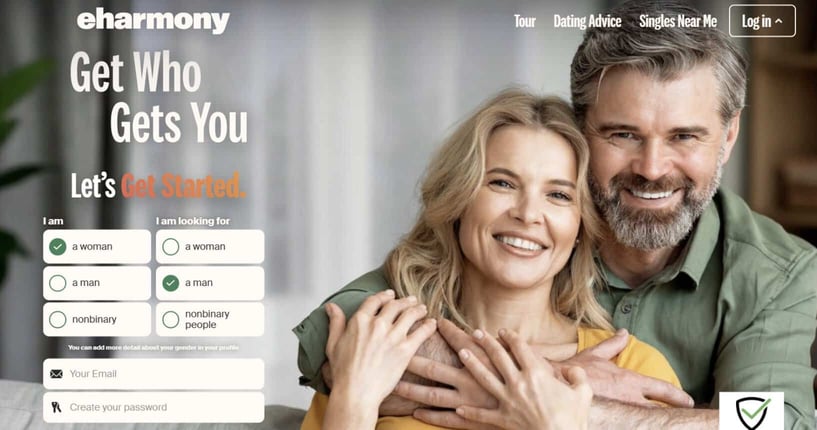
Similarly, eharmony has an opt-out choice outlined in the privacy policy. The platform also uses a human and technological review to weed out fake profiles.
You’ll need to submit and verify an email address to join the eharmony site. The app uses text verification. First names are required, but photos are not needed to browse the database.

- Relationships: Hookups, Casual Dates, Affairs
- Match System: Search by age, location, appearance, and more
- Our Experts Say: “With its massive user base and advanced privacy features, Ashley Madison is the #1 site for discreet hookups, dates, or relationships.” Our Review »
- Browse Free: View Photos Now
As a famously discreet dating site, Ashley Madison takes online privacy very seriously. Especially after its data breach in 2015. The team learned the hard way how important it is to protect user information.
The platform has an extensive “Your Rights” section in its privacy policy, including your right to restrict data procession, direct marketing, and to withdraw consent at any time.
How to Read Privacy Policies
A lot of people skip reading the privacy policies, but it’s worth giving it a perusal before clicking “accept.” I’ll outline a few key things to look for.
Data Retention Policies
These policies define how long data is stored, where it’s kept, and how it is destroyed. For example, under the “How Long We Retain Your Information” section of Tinder’s privacy policy, Tinder explains that they keep user data for three months following account closure or one year after an account is banned.
Third-Party Sharing
A dating site’s policy on how they share your data and with whom they share it can be found in their privacy policy.
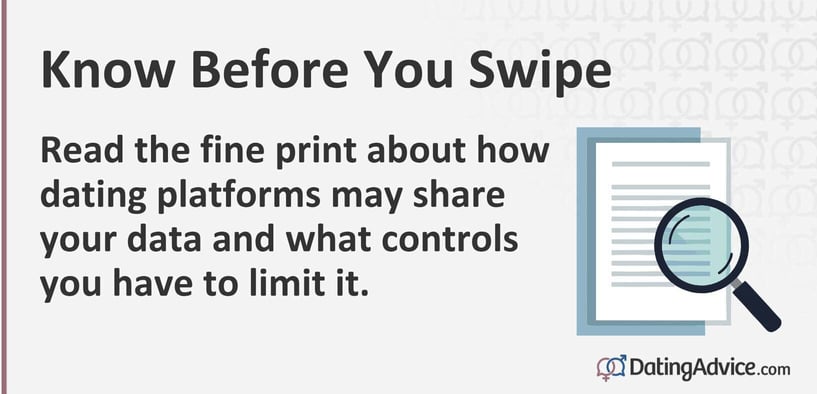
OkCupid’s privacy policy outlines its third-party sharing policy under the section, “How We Share Data,” stating, “we provide certain info about you to third parties, including advertising partners.”
OkCupid is famous for free chat features, but its privacy standards are worth looking into before jumping aboard the free stuff train. You may not want your account info in the hands of nameless advertisers, vendors, and affiliates.
Account Deletion Rules
Pretty much no one plans on keeping their dating profile active for life. It’s a means to an end, so pay attention to the rules and policies around deleting your account (and your data).
Jdate’s privacy policy explains that users can request to delete their accounts online or by phone. Once their account deletion is confirmed, all personal data is removed from the site’s system within 30 days.
5 Essential Dating Site Privacy Tips
Regardless of which dating site you choose, you can take measures to protect yourself. Here are my expert tips to ensure that your personal data stays personal.
1. Limit the Information You Share
Avoid using your full name, address, workplace, or any other information that would allow someone to search you on the internet.
Some apps allow you to link your social media accounts. However, linking your social media to your dating profile gives fraudulent users even more access to your personal information which they could use to scam or stalk you.
2. Use Unique Photos
Google image search is an online dater’s best friend. It lets you plug in an image (like your match’s profile pic) into a search engine and see if the same image is used anywhere else on the internet.
If you don’t want your photo traced back to your LinkedIn or Instagram, use unique photos that aren’t on your other profiles.
3. Create a Separate Email for Dating
Many dating apps require some kind of authentication to create a profile. Usually that means you must provide an email address or phone number to prove that you are really who you say you are. I always go for the email address over the phone number, when I can.
I recommend creating a separate email account for online dating to protect against data breaches, hackers, and data sharing with advertisers.
It’s also just nice to keep “hey someone matched with you” emails in a separate space from actual important emails.
4. Turn Off Location Tracking
Dating apps use location data to match users within a certain radius. Apps can sell this data to third parties.
Unlike other dating apps that require a premium subscription for you to change your location, Hinge allows you to manually change your location for free.
This means you can turn off your location tracker for the app and manually input your location so you can continue to match locally!
5. Use Strong, Unique Passwords
You should use a strong and unique password for online dating for the same reasons you would for your bank account: to protect yourself against identity theft, account hijacking, and scammers accessing your personal information.
Protecting Your Privacy While Messaging
You’ve chosen a dating site that aligns with your privacy priorities. You’ve set up a profile that protects your identity. And you just got a match that you’re really excited about!
Here’s how you can message on a dating site while being mindful of your privacy:
● Keep conversations on the platform: As cute and charming as they might be, it takes longer than a singular conversation to determine if someone is trustworthy with something as personal as your phone number. I recommend waiting until the first date to give your phone number.
● Consider a video date: The best way to protect yourself against potential catfishing or scamming is to video chat with your match before you give out your phone number or meet in person! Many dating apps have moved to allow video calls in-app, such as Bumble and eharmony.
● Avoid sharing sensitive content: You might feel tempted to flirt with your match by sending sexual messages or photos. But in case you are messaging with a scammer, there is a data breach, or someone hacks into your account, you shouldn’t send any sensitive content.
Manage Your Dating Profile With Care
Here’s how to build a profile that attracts matches without giving away personal information in case of scammers:
Go by a Nickname
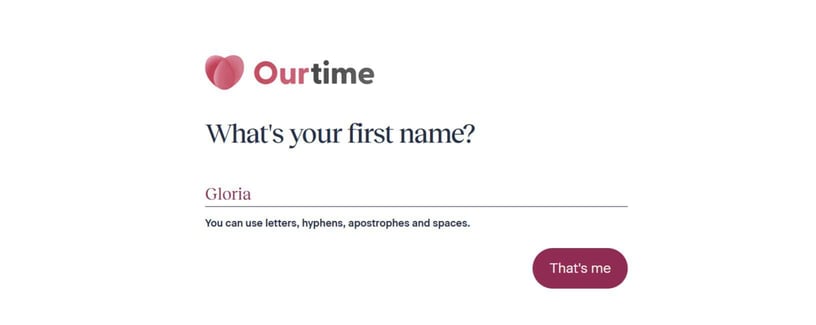
You should never use your full name (first and last) on your dating profile. But to take it a step further in protecting your privacy, you can use a nickname!
Write a Privacy-Conscious Bio
You want a bio that strikes a good balance between specificity and vagueness (trust me, it’s possible!)
Be specific about your interests, but vague about your location, employer, or other identifying details. For example, you could say “Lover of finding rare books” without including the name of any specific bookshop.
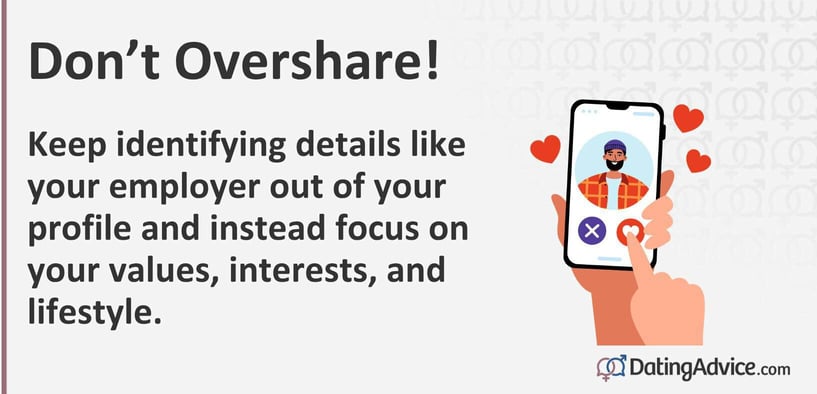
Instead of saying you work for an environmental nonprofit, you could say you’re “passionate about the environment” or that you “have a job that makes a difference in the world.”
Control Profile Visibility
Different apps have different features that allow you to control who is able to see your profile.
If you go into your account settings on Match, you can set your profile to Hidden, which means it won’t show up in anyone’s swipe list. Only members you’ve contacted first can see your profile.
You’ll need a premium membership on Bumble, Feeld, or Tinder to turn on the Incognito Mode and browse anonymously. Ashley Madison offers discreet viewing for free.
Additionally, with Ashley Madison’s photo privacy tools, you can blur or mask your face in your photos until you choose to reveal yourself to a match.
How to Spot Scams
You match with someone who’s exactly your type. Sure, they seem eager to move the conversation off the platform, but you’re excited they’re showing so much interest. You text throughout the day, saying how excited you are to meet each other.
Then you get a call: they need you to send them money for an emergency.
What’s a Romance Scam?
Romance scammers are people who create fake profiles on dating apps for the sole purpose of building a relationship of trust with you so they can then create a story and ask you for money.
Warning signs to watch for include overly complimentary messages and fast emotional escalation (aka love bombing). Their goal is to build trust and make the relationship feel real, and so they’ll be quick to tell you how special your connection is, trying to move the relationship forward as quickly as possible.
The profiles often seem too good to be true. Scammers will create a fake profile that use AI or steal the photos of attractive individuals. Ask yourself:
- Do their photos look too polished or doctored?
- Is their bio full of impersonal clichés?
- Does their bio match what they’re telling you in their messages?
- Are their claims about themselves realistic, or does it sound fantastical?
A romance scammer will also continually push your boundaries and try to get you isolated. They might pressure you to move off the dating app and chat on WhatsApp or Yahoo Messenger. They do that so they can ask for money or get your information without the dating platform monitoring and flagging their behavior.
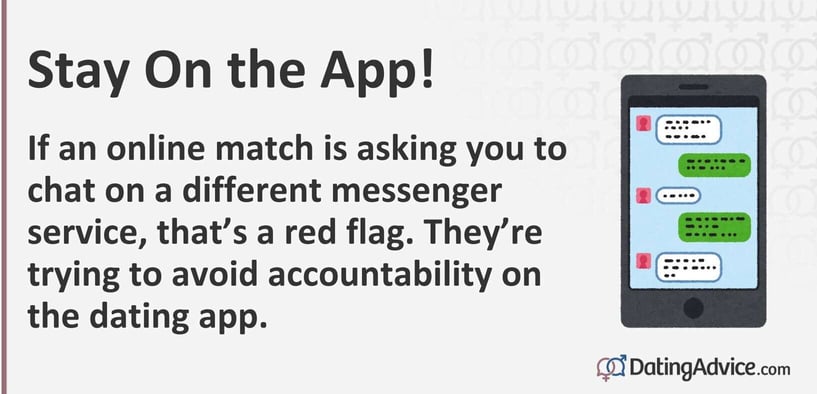
Sometimes small things like speaking broken English or changing details in a story could be enough to rouse suspicion. Listen to your gut, and don’t let a stranger talk you into anything that feels off to you.
What to Do When Your Privacy Is Compromised
A scammer got into your account. Or you gave away information you shouldn’t have. Whatever happened, the important thing is to act quickly to shield yourself from harmful consequences.
Change Passwords: If you suspect somebody might be trying to log into your account, take quick action. Change your password and make sure you have two-factor authentication installed.
Report the Issue: Report any bad behavior to the dating site immediately! You should also block any fraudulent or inappropriate accounts. If necessary, file a complaint with the authorities.
Monitor for Identity Theft: If you suspect a bad actor might have gotten access to your bank information, monitor your credit reports and even place a credit freeze if necessary. Go here to report identity theft.
FAQs: How Can I Stay Anonymous on Dating Sites?
Some privacy-conscious individuals open a separate email account just for their online dating life. That can be a good way to keep dating sites out of your business.
Some apps allow for usernames or nicknames to be used on profiles, and you should also add unique photos that don’t exist elsewhere on the web. That lessens the likelihood of being traced back to your work or social media accounts.
Don’t link your social media accounts to your dating profile, and be watchful of what information you share. You may want to avoid identifying details like your employer or neighborhood.
Can Dating Apps Sell Your Data?
Yes — dating apps frequently sell user data to outside partners. However, if you read the dating site’s privacy policy closely, you can see what data a site uses and how they use it, as well as which rights you have to limit its access to your data.
Is Online Dating Safe?
This is like asking if picking up a date at a bar is safe. It really depends on where you are and how you act. If you’re not careful, you might encounter an immoral person and have a bad experience.
That’s why we’ve been so rigorous in talking about safety measures for online dating. Because your safety ultimately comes down to you.
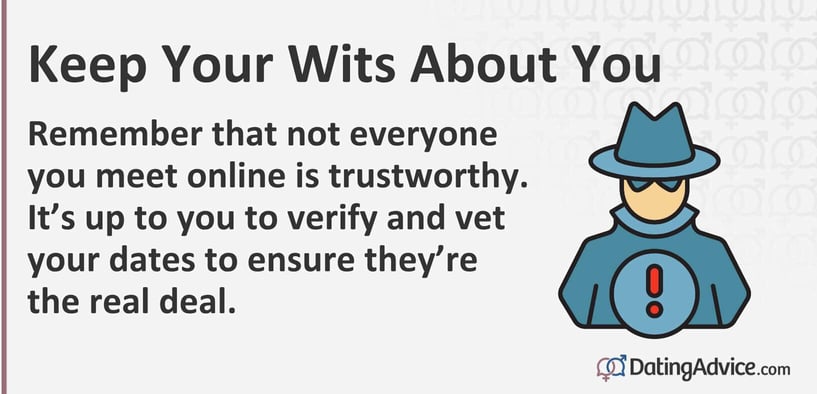
Online dating can be safe — and fun! — when you take appropriate steps to protect your information, keep conversations on the app, watch for red flags, and trust your judgment when things feel off!
Prioritize Your Privacy & Avoid Oversharing
Safe online dating is all about hoping for the best while preparing for the worst.
You should take all the precautions you see fit to protect your privacy — using unique photos, investigating the dating app’s privacy policy, looking out for red flags — to protect yourself in case of a scam or a data breach.
I’ve spent many years on dating apps without incident, so I can assure you that it is possible to online date safely and successfully while protecting your privacy!