


Taking the first step is almost always the hardest part — maybe that’s why first dates feel so challenging.
It can be exhausting to take the risk of putting yourself out there over and over again, and it’s demoralizing to have a dull time (or get rejected). But it doesn’t have to be this way! I have some tips to make lesbian first dates a more fun, rewarding way to get to know new people.
1. Plan for Safety First
At its most basic, dating means meeting up with a (near) stranger with the express purpose of giving them some level of intimate access to you.
While there’s no need to fearmonger or panic, the first step of planning a first date is always thinking about basic safety.
Are you meeting your date in a public place like a café, restaurant, or bar?
Does someone know where you’re going and with whom?
If you decide to leave the public place to go somewhere more private, are you letting someone know — and are they waiting to hear a check-in from you at a certain time so they know you’re safe?
Are you prepared to have conversations about safer sex and sexual boundaries if the date ends up going super well? Are you prepared to leave the date, with a plan for independent access to transportation, if you need to?
How much information are you comfortable with a first date having about you, like your real phone number or last name?
2. Pick a Favorite First Date Spot
Part of what’s difficult about first dates is the planning — it’s exhausting to go back and forth with a near-stranger about logistics and times and then figure out an outfit for someone who may turn out to be mediocre.
Cut down on some of the cognitive load by figuring out a few things that work and sticking with them: a local cocktail bar or coffee shop you know you like, an outfit or two you know you feel good in, an activity you know you’ll enjoy no matter who you’re doing it with.
3. Be Interesting by Being Interested
Sometimes we’re going into first dates preoccupied by how we can make sure our date sees the best version of ourselves: funny, cool, accomplished and smart.
But if we try too hard to showcase these things about ourselves, we can accidentally leave our date thinking we’re something much worse: self-absorbed and boring.
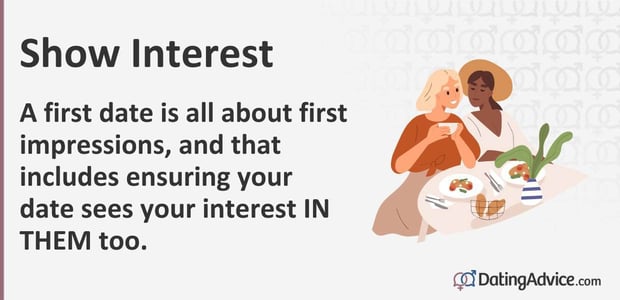
Worry less about what to tell your date about yourself, and focus more on approaching the conversation with a sense of genuine curiosity and interest in her personhood and experience of the world.
Rather than thinking about a first date as an opportunity to win someone’s approval or affection, think of it like a challenge. Your goal is to truly understand as much as possible about someone within the time you have allotted.
Even if you don’t end up feeling a romantic connection with this person, you’ll walk away appreciating how many different types of people and worldviews there are out there.
4. Know What You’re Looking For
One of the most frustrating people on earth to go on a first date with is the person who “doesn’t know what they want” or who’s “just seeing what’s out there.”
It’s impossible to gauge if you’re on the same page with a date when they can’t say what page they’re on.
Set your dates up for success by thinking about what it is you’re trying to get, whether it’s casual dating or a serious relationship.
5. Ask the Right Questions
If you struggle with small talk, first dates can feel like a triathlon. But it doesn’t have to be.
The secret to a dynamic, free-flowing conversation that feels effortless is moving away from narrow, concrete questions (“What do you do for work?” “How many siblings do you have?”).
Instead, stick to broader, open-ended questions on topics your date can talk about at length:
- What do you like about your job?
- Are you close with your siblings?
You should avoid anything that is a yes-or-no answer. Don’t just ask for facts; ask for stories and details.
6. Keep Red & Green Flags in Mind
It can be hard to know how you feel during and after a first date — did you really connect, or are you both just good conversationalists? Are you compatible, or were you overwhelmed by attraction?
Keeping a proactive list of red and green flags — absolute dealbreakers for you in a partner, as well as things you know indicate someone will be a good match for you — can help you evaluate a first date with a level head.
7. Stay Connected to Your Own Experience
First dates can feel like tests to pass or fail. Were we cool, funny, and attentive enough? Did we say the right things? Was our date attracted to us, impressed by us, into us?
If you find that you tend to get in your head or feel intense performance anxiety, it can be helpful, somewhat paradoxically, to focus on the other person. We can get so obsessed with the validation question of whether someone else likes us that we forget to seriously assess whether we like them.
Did your date ask you enough questions? Did you find them funny, interesting, and attractive? Do you feel chemistry or desire for them? Do they meet your needs and expectations as a partner?
You may find that you care less about how you’re performing when you allow yourself to fully notice whether your needs are being met.
8. If You Like Your Date, Show It
Whether it’s because of internalized homophobia, purity culture, or concerns about seeming “predatory,” lesbians and queer women can often be hesitant to express physical attraction or “make the first move.”
This can easily leave both parties feeling insecure and unsure of where the connection stands: “Was that a date, or are we just friends?”
Make things easier on yourself and your date by flirting if you’re feeling it. Tell her she looks hot, touch her arm, ask to kiss her goodnight.
9. Follow Up With Clear & Kind Communication
The last step of a first date, no matter how well or poorly it went, is always following up with the person you met to discuss what’s coming next.
If the date went well, this could look like an excited dialogue about making future plans, either on the sidewalk outside the bar or via a text. It could mean hugging or kissing goodbye if you feel comfortable taking that step.
It feels great to hear that someone had a wonderful time with you and to be told explicitly that they want to see you again, rather than having to wait and wonder — if you liked your date, don’t be shy about letting them know.
If you didn’t feel a romantic connection or didn’t gel with your date, it’s also important to set clear expectations about what the next steps will be, even if the next steps are that you don’t want to see them again.
There’s no need to provide constructive criticism or a long explanation about what doesn’t click for you. “I had a great time meeting you, but didn’t feel a romantic connection. Wishing you the best of luck!” is more than enough.