


Ask anyone who’s actively dating how they meet people, and they’ll probably tell you they’re on the apps. It’s undeniable: online dating is the go-to way to start dating these days.
Sure, some people meet their partners through work, school, or mutual friends, but if you’re setting off with the intention of meeting someone, chances are you’re looking online first.
But how often is online dating effort actually ending in success? And what counts as dating “success” anyway? These questions often seem elusive in the dating world, but I’m going to find some answers.
1. Of Engaged Couples, 27% Met Online
In romance novels (and many people’s minds), marriage is often treated as the final goal of dating, so it makes sense that we look at engagements to judge dating success.
According to The Knot’s 2024 Jewelry and Engagement Study of nearly 8,000 engaged couples, 27% met online1, the highest percentage of any method of meeting. The second highest was having friends in common, at just 16%.
If you’re still feeling some skepticism about whether online dating really works, this is clear evidence that it does. According to The Knot, online dating is responsible for over a quarter of engagements.
2. Over 1 in 3 of Engaged Online Daters Met on Hinge
Even within dating apps, no two are created equal. Of the engaged couples who met online, The Knot found that 36% met on Hinge, followed by 25% who met on Tinder2.
Hinge is marketed as the app “designed to be deleted,” and it seems that it lives up to its word. It may be in part a self-fulfilling prophecy: Singles know of its reputation as the serious option of the popular, general dating apps, so it’s the go-to spot for singles looking for a more lasting connection.
On the other side of the spectrum, Tinder has a reputation for more casual dating (though plenty of serious daters are on Tinder).
3. In 2023, 30% of American Adults Had Used a Dating App
There’s no one “type” of person you can find on dating apps; getting on the apps is pretty standard dating practice nowadays. By 2023, 30% of American adults had used dating apps before, according to the Pew Research Center (and 9% had been using them in the past year of the survey)2.
The narrative around dating apps used to be that they were just for desperate people, or that online dating implied awkwardness or strangeness.
But that’s clearly not the case (and probably never was). Just about every type of single has dabbled in online dating at one point or another.
4. Over Half of 20-Somethings Online Date
A significant portion of the general population uses online dating. But what is perhaps even more impressive is the number of 18-29-year-olds who online date; according to the Pew Research Center study, 53% of this age group uses online dating4.
While older adults may have already been in their forever relationships or figured out a preferred style of dating before online dating came onto the scene, the youngest adults came of age in a time where online dating was widely available, and sometimes, the only option. For this age group, online dating feels perfectly natural.
5. Online Dating Made Romance Easier for 42% of People
Singles often lament the negative tolls online dating has had on dating culture. People are less likely to take risks in person, and there’s less room for serendipity. But that doesn’t account for the ease that online dating has added to romance. The Pew Research Center study found that 42% of daters believed online dating made their romantic experiences easier4.
Dating apps bring you into contact with thousands of new people you never would have crossed paths with in person. They even make it easy to chat with someone and learn about their background before the first date, so you aren’t stuck with someone you won’t be able to stand for the whole evening.
6. About 1 in 10 Partnered Adults Met Via Online Dating
Just because people try online dating doesn’t mean it works. If no one on dating apps was actually meeting in real life, that wouldn’t matter much. But it turns out that a sizable portion of adults in committed relationships — 10% of partnered adults — met through a dating app5.
And when you account for the sheer number of couples who were already partnered before dating apps came onto the scene, the number of relationships dating apps have made is outstanding.
As more young people enter adulthood in a world where dating apps are a given, that number will likely climb. In a decade, meeting offline might seem strange, or at least unique.
7. A Quarter of Queer Adults Met Their Partner Online
Whether or not you enjoy spending your time online, there’s no question about one thing: dating apps and social platforms are a lifeline for queer singles. 24% of partnered LGB singles met online7.
For some queer singles, the appeal of online dating is primarily about numbers. When you’re already a minority, it’s extremely helpful to get some assistance meeting similar people. Plus, online dating can offer some anonymity and safety to find interested partners without the potential dangers of pursuing a relationship in person.
8. About 61% Say Dating Profiles Feel Less Authentic
Does everything online feel a little too polished these days? It isn’t just you. According to Match’s annual Singles in America study, 61% of daters say that dating profiles feel less authentic now8.
There are many potential reasons for this dating-app sterility. Maybe the rise of AI in profile creation is making for cookie-cutter profiles. Maybe singles simply know what a “good” profile looks like, which takes away opportunities for creativity. Either way, many singles find it increasingly difficult to get a sense of someone through their dating profile.
9. Nearly Half of Gen Z Uses AI for Dating
It isn’t a fringe choice to use AI in dating. The Singles in America study found that 49% of Gen Z use AI in some part of their dating process8. That could be anything from having an AI pick their profile photos to completely outsourcing their chat responses.
While using AI for dating may cut down on the time it takes you to date, it also sacrifices the personal component of dating, which, for most people, is the whole point.
AI can be a helpful tool for dating advice, but try not to rely on it for any component of the dating process where your match would assume they’re hearing from a human.
10. About 26% of Gen Zers Say AI Made Dating Easier
Gen Z isn’t just trying out AI in dating – for 26% of Gen Z, AI has noticeably made their dating experiences easier10.
Still, it’s worth considering what part of dating AI has improved. It might make it easier for singles to message multiple people or get a first date, but does it make it easier to go out with people you really connect with or make lasting connections in person? Time may tell.
11. Online-Dating Marriages Were 1.6% Less Likely to Break Up
Online-started relationships seem to be built to last. One study from the University of Chicago found that, among married couples, just 6% of observed relationships that started online ended by the end of the study, compared to 7.6% of those that started offline10. Couples that started their relationships online also had higher general happiness.
Couples that meet online choose each other out of a sea of people. That can select for higher compatibility than offline relationships, where connections often come from proximity.
12. Around 80 Million American Adults are on the Apps
Wondering where the singles are? They’re online. In the United States, around 80 million adults are on dating apps12. That’s nearly a quarter of the total population.
One of the clearest benefits of online dating is that you get clear access to nearly everyone in your area who’s also open to an online connection. You simply can’t replicate those odds offline.
13. Over a Third of Singles are Looking for Love Online
If you think that online dating is just for hookups, that’s no longer the case (if it ever was). eharmony found that 35% of singles are looking for long-term relationships online13. They aren’t using dating apps and sites for casual connections; they’re looking for something real and lasting.
14. Singles Who Pay for Apps Report 8% More Success
Singles considering investing in the premium versions of dating apps probably should pay up. According to eharmony, 58% of singles who paid for premium features reported dating success, compared to 50% of singles who used the free versions of apps14.
Premium apps offer plenty of useful features that make it easier to foster your connections with your matches and meet more people. In online dating, so much depends on the quality of your initial spark with your match, so putting in a bit more work on the front end can make a huge difference in your relationship odds.
15. Just 20% of Singles Believe Profiles are Completely Inauthentic
Most people aren’t jaded. Just 20% of singles believe that others are completely inauthentic online, though more think others are somewhat inauthentic15.
While being completely inauthentic – making a totally fake profile or lying about your name and background – is a pretty clear violation, singles lie in smaller ways. They post photos to their profiles of their much younger selves or exaggerate their accomplishments.
You don’t need to spill all your secrets online, but try not to deliberately mislead the people you’re talking to. It all comes out eventually.
16. Sadly, 1 in 10 Married Young Adults Still Swipe
Not everyone is online dating for the right reasons. One study found that 10% of married young adults are actively on dating sites16.
Maybe they’re just swiping and not actually cheating, but it’s reasonable to say that’s shady behavior, and most online daters likely wouldn’t want to match with a married person.
17. About a Third of Married Adults Say They Use the Apps for Friends
So why are so many married people on dating sites you might ask? For friends, of course! 38% of married adults on dating platforms claim they’re looking for friends17. The keyword being claim.
Plenty of people absolutely do find friends on dating apps, whether that be their explicit goal in joining the app or something that comes naturally out of dates that have a more platonic vibe. But with friendship apps like Bumble BFF growing in popularity, married adults don’t need to start dating just to make a buddy.
18. People Earning Over 100k are Most Likely to Swipe While Married
There was a clear gender and class split in who uses dating platforms while married. Of any group, men were the most likely to be on dating apps while married, with 18% of young married men on the apps18. Next up was individuals making over $100k per year, at 16%. And due to the wage gap, this group is more likely to be male, too.
19. Nearly Two-Thirds of Online Daters Believe Relationships That Start Online Can be Just as Successful as IRL
According to most people, it doesn’t really matter how you start the relationship; it matters what you do once you’re in it. Pew Research Center found that most people don’t assume a quality difference in relationships that start online or offline. 62% believe relationships that start online can be just as successful as those that start offline19.
Some people think that starting a relationship online takes some of the chemistry out of the connection, but fewer people believe that matters in the long run. Once you’re in a long-term relationship, your connection will be so much deeper than where it started.
20. Over Half of Women Think Meeting Via Online Dating is Unsafe
The internet can be a scary place, especially for women. A solid 53% of women said that they think online dating is an unsafe way to meet someone20.
You certainly run a higher risk of encountering catfish or scams online. But in terms of your actual physical safety, there isn’t really one tried-and-true safe way to meet someone. Your friend from church or your coworker could turn out to be just as dangerous as your online match. So research people before you go out with them, meet in public, and always let someone you trust know where you’re going.
21. Among Online Daters, 41% Found the Experience Positive
The best way to measure success is often to learn if people found their experiences successful. When it comes to online dating, about 41% did, finding the experience positive21. Compared to the 32% who found online dating a negative experience, these are pretty good odds.
Online dating success can be tricky to measure. Everyone has different ideas of what success looks like. For some, success is marriage; for others, it’s great conversation. But singles themselves are the best judges of the quality of their experiences and if they got out of it what they wanted.
22. Nearly Half of Online Daters Have Used Tinder
There are a lot of dating app options out there these days; still, one reigns supreme. Of people who have used dating apps, a whopping 46% have used Tinder, making it far and away the most popular dating app22.
Quantity isn’t always quality, but when it comes to dating, most people prefer the benefit of having everyone they could be interested in on one platform. If you’re looking for numbers, Tinder is your site.
23. When Choosing a Match, 57% Prioritize Shared Family Values
Family is everything for most daters. One study found that of the possible connection or disconnection points in online dating, shared values were the biggest one, with 57% of online daters saying that shared family values are a big priority in picking a match.
Family doesn’t always come up a lot in an early relationship, but shared values make a huge difference as your connection gets more serious. If you have different views about how close you want to be to your family or what you want your family to look like, you’re in for some tough conversations further down the line.
24. Physical Attractiveness Boosts Your Chances of a Match by 20%
Whether you’re online or offline, looks matter a lot in dating. But attractiveness might be even more important in online dating than it is IRL.
One study found that for online dating profiles, one standard deviation of change in the attractiveness of someone’s profiles had a 20% effect on their match numbers, compared to just a 2% change for the same change in intelligence23.
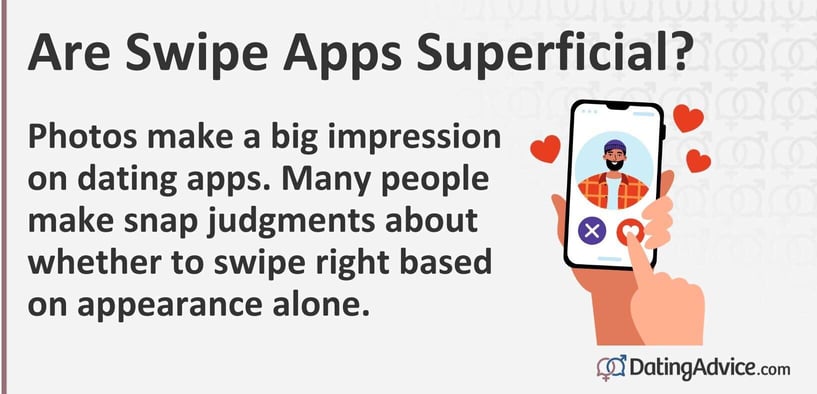
This can be a somewhat depressing reality for online daters who feel passed over. But there are tangible changes you can make to improve your odds (without a huge makeover).
Take some nice photos of yourself hiking a nature trail or doing a fun activity. Make sure your profile photos aren’t all the same and show a little personality. Smile and look directly at the camera.
And get your angles right. Bad lighting can make you look a whole lot worse than you do.
25. In 2026, Online Dating Revenue is Expected to Grow to $3.24 Billion
Online dating is a lucrative industry, and as more singles rely on it, it becomes worth more and more. In 2026, the industry is expected to hit $3.24 billion24.
The cost of the industry doesn’t necessarily tell us how much it works. However, given that premium online daters see more success, adding some capital to the industry might benefit daters, too.
26. In a Survey of 6,500 Couples, Pairs Who Met Online Felt Less Passion
While couples who met online can go on to have thriving relationships, there’s some evidence that they tend toward stability over passion. A global study of 6,500 couples found that couples who met online reported having less passionate relationships than those who met offline25.
Perhaps that initial spark that makes someone take a chance and ask out a romantic interest or go in for a kiss is necessary for sustained passion. But it may be more likely that people who get into long-term relationships online go in with the goal of building a strong life foundation, unlike offline couples who often start dating because they happen to find each other.
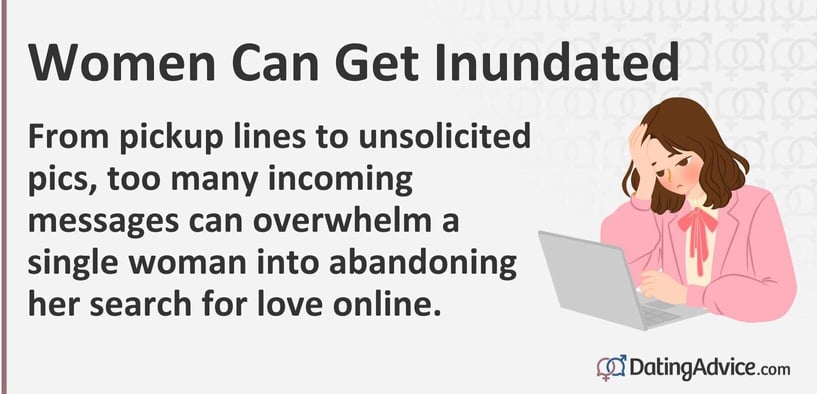
27. A Quarter of Women Have Received Unsolicited Sexual Images
There’s a scary side to online dating, especially for women. Pew Research Center found that 25% of online daters who are women reported being sent an unsolicited sexual image in the dating process26.
Sending explicit content may seem flirty or harmless to the sender, but for the recipient, it can be traumatizing. Always get explicit consent before you sext, especially with someone new.
28. Of Women, 55% Say Dating is Harder Now
Online dating is widely available now, yet 55% of women think dating as a whole is harder than it used to be27. They cite increased fears over safety, the role of technology, and the difficulty of meeting new people as some of the reasons it’s gotten trickier.
At the same time, many modern singles have never experienced dating before it went online. And of those who did, the experience of dating in mid-life is completely different from dating in your early 20s (for better and worse). It’s hard to accurately compare dating pre- and post-technology when the grass is always greener.
Online Dating Can Work (With Some Effort)
Don’t get me wrong: Online dating isn’t easy. But neither is dating offline. No matter how you do it, dating takes a lot of work.
But plenty of people find love online every day. Increasingly, online is the primary way to meet someone. So if it seems like nothing else is working, give a new dating profile a shot. You might be surprised who you’re able to find.
Data Sources:
- https://www.theknot.com/content/online-dating-most-popular-way-to-meet-spouse ↩︎
- https://www.theknot.com/content/online-dating-most-popular-way-to-meet-spouse ↩︎
- https://www.pewresearch.org/short-reads/2023/02/02/key-findings-about-online-dating-in-the-u-s/ ↩︎
- https://www.pewresearch.org/short-reads/2023/02/02/key-findings-about-online-dating-in-the-u-s/ ↩︎
- https://www.pewresearch.org/short-reads/2023/02/02/key-findings-about-online-dating-in-the-u-s/ ↩︎
- https://www.pewresearch.org/short-reads/2023/02/02/key-findings-about-online-dating-in-the-u-s/ ↩︎
- https://www.pewresearch.org/short-reads/2023/02/02/key-findings-about-online-dating-in-the-u-s/ ↩︎
- https://www.singlesinamerica.com/ ↩︎
- https://www.singlesinamerica.com/ ↩︎
- https://www.singlesinamerica.com/ ↩︎
- https://news.uchicago.edu/story/meeting-online-leads-happier-more-enduring-marriages ↩︎
- https://www.forbes.com/health/dating/dating-statistics/ ↩︎
- https://www.eharmony.com/online-dating-statistics/#fn2-3175 ↩︎
- https://www.eharmony.com/online-dating-statistics/#fn2-3175 ↩︎
- https://ifstudies.org/blog/1-in-10-married-young-adults-are-on-dating-sites- ↩︎
- https://ifstudies.org/blog/1-in-10-married-young-adults-are-on-dating-sites- ↩︎
- https://ifstudies.org/blog/1-in-10-married-young-adults-are-on-dating-sites- ↩︎
- https://ifstudies.org/blog/1-in-10-married-young-adults-are-on-dating-sites- ↩︎
- https://www.pewresearch.org/internet/2020/02/06/the-virtues-and-downsides-of-online-dating/ ↩︎
- https://www.pewresearch.org/internet/2020/02/06/the-virtues-and-downsides-of-online-dating/ ↩︎
- https://ssrs.com/insights/the-public-and-online-dating-in-2024/ ↩︎
- https://ssrs.com/insights/the-public-and-online-dating-in-2024/ ↩︎
- https://www.sciencedirect.com/science/article/pii/S2451958824002124 ↩︎
- https://www.statista.com/outlook/emo/dating-services/online-dating/worldwide ↩︎
- https://www.abc.net.au/news/2025-08-24/online-dating-research-unhappy-relationships-tinder/105681572 ↩︎
- https://www.pewresearch.org/short-reads/2020/08/20/key-takeaways-on-americans-views-of-and-experiences-with-dating-and-relationships/ ↩︎
- https://www.pewresearch.org/short-reads/2020/08/20/key-takeaways-on-americans-views-of-and-experiences-with-dating-and-relationships/ ↩︎